Rechercher dans ce blog

Saturday, February 10, 2018

Slovak synagogue transformed into a caf

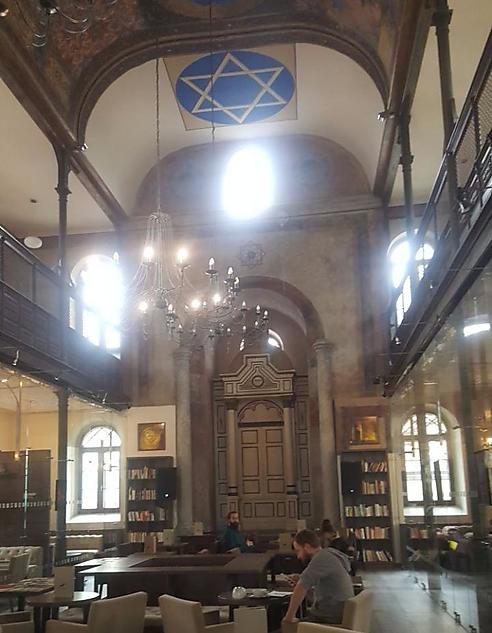
Eighty-two percent of the Jews residing in Trnava, Slovakia, were murdered in the Holocaust, destroyed along with an ancient Jewish heritage dating back to the 12th century. The city's synagogues were similarly demolished—or were converted for other uses. Israeli traveler Meir Davidson found one such synagogue, converted to a café.


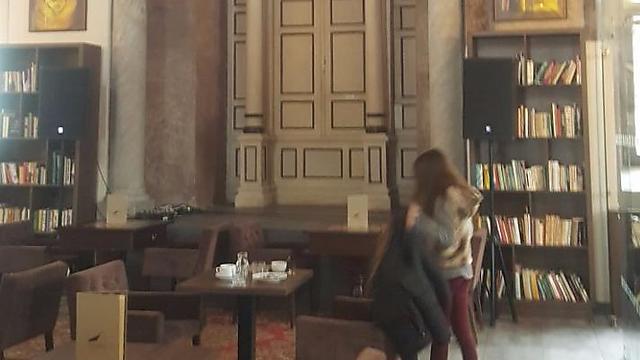
During his travels in Trnava—nicknamed "Slovakia's Rome" due to its proliferation of churches—Davidson found a crowded coffee shop attempting to blend into the architectural space which it occupied without totally eradicating it.

"The main street had a model of the city containing two synagogues near the local basilica," Davidson told Ynet. "We looked for them and were shocked to find an active café, filled with local yuppies."
A synagogue in Slovakia was transformed into a coffee shop (Photo: Meir Davidson)

A synagogue in Slovakia was transformed into a coffee shop (Photo: Meir Davidson)

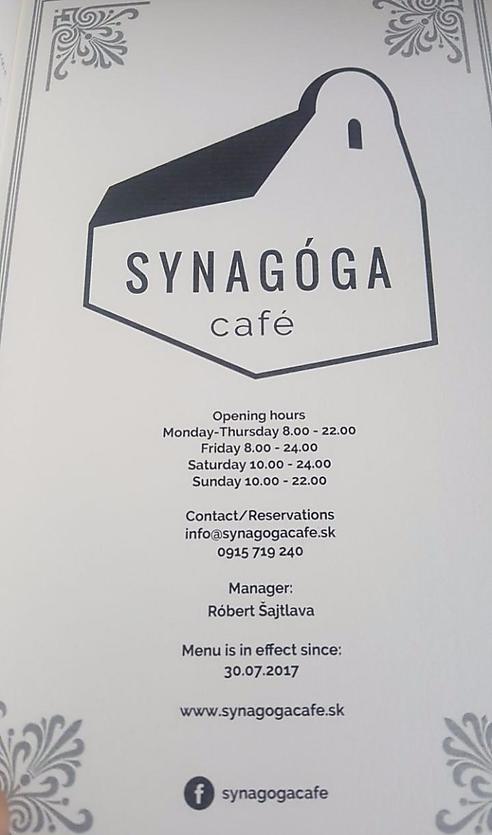
The coffee shop's management, he added, made no effort to disguise the structure's previous designation as a house of worship and even stated it explicitly—as the café was named Synagóga Café and the "synagogue's history was printed on the menu."

The coffee shop's proprietor took proud in the fact that the structure—apparently a synagogue belonging to the Status Quo Ante denomination and built in 1897—was awarded historical preservation among 18 other religious buildings.

"I myself deal in structure preservation in Acre and their transformation into special hospitality units," Davidson said. "I got the impression there was truly amazing preservation works in place and the story of the preservation was itself interesting."

Davidson did qualify in adding, "Nothing is written about the community itself or what befell it. There's not even a monument to their memory. We were immensely shaken by the experience and felt mixed emotions."

 (Photo: Meir Davidson)

(Photo: Meir Davidson)

 The Israeli traveler shared his impression in a Facebook post, in which he said, "We sat in the Synagóga Café in Trnava, Slovakia, housed in a magnificent 200-year-old structure that was crumbling after its Jews had left." "Its restoration included expansive preservation works, including of the Torah ark, ceiling murals, the location of the bimah, charity boxes, Jewish symbols and the women's section. "The work is amazing. The restored premises were converted to a fashionable café, a cultural hotspot and concert and performance venue. The bar is excellent, as are the cakes." Davidson, who visited last Friday, cynically added, "I have to note I haven't enjoyed the welcoming of the Sabbath in a synagogue that much for a long time. Definitely mixed feelings, as the local community didn't just up and disappear.
The coffee shop's menu (Photo: Meir Davidson)

The coffee shop's menu (Photo: Meir Davidson)

"It's really quite complex. An entire generation has now appeared that connotes the word 'synagogue' and Hebrew letters and symbols with pleasant experiences. The food in the café is not kosher, however, and shelves are overloaded with hundreds of books that have nothing to do with Judaism. "One of the biggest questions in the world of preservation is whether to preserve merely the structure or its cultural values as well. I can't answer that question, but it has far-reaching implications."

Let's block ads! (Why?)

Slovak synagogue transformed into a caf : http://ift.tt/2ExkHiY

Thursday, February 8, 2018

Israeli high school trips to Poland to continue

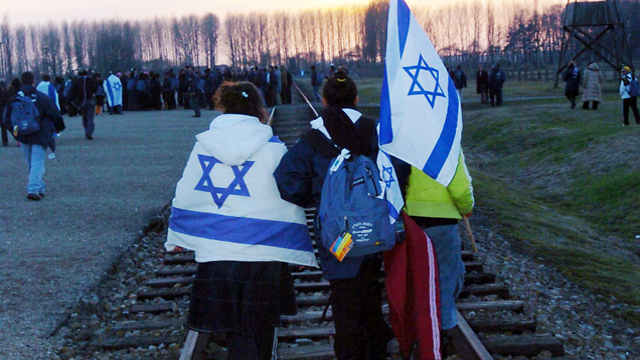
Education Minister Naftali Bennett said this week that Israeli high school trips to Holocaust sites in Poland will go on despite a new controversial Polish law imposing jail terms for suggesting the country was complicit in the Holocaust.


“Many people asked me to cancel the Poland trips in light of the law,” Bennett told educators at an event Tuesday, “but after considering the matter, I decided that they will continue as usual.”


Israeli teens visit the death camps in Poland (Photo: Haim Horenstein)

Israeli teens visit the death camps in Poland (Photo: Haim Horenstein)


He explained that the trips to Poland are “an act of first-class education for our children and for Holocaust education.”

He went on to decry the Polish legislation for its attempt to change history.

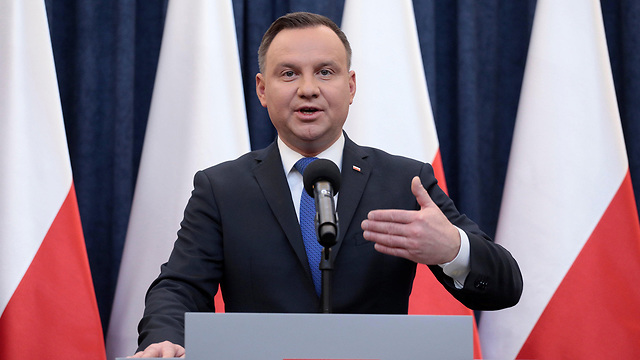
Polish President Andrzej Duda said earlier this week that he stands by the legislation, but left room for amendments. The law imposes a fine or up to three years incarceration for someone using the term “Polish death camps,” or one who publicly attributes—contrary to the facts—responsibility for Nazi atrocities to the Polish people or state.
President Duda (Photo: Reuters)

President Duda (Photo: Reuters)

Defending the law, Duda said it would not prohibit Holocaust survivors and witnesses from talking about crimes committed by individual Poles.

"We do not deny that there were cases of huge wickedness," he said in a speech.

But he said the point of the law is to prevent the Polish nation as a whole from being wrongly accused of institutionalized participation in the Holocaust. He recalled that the Polish government at the time had to go into exile and Polish officials were those who struggled to inform the world that the Germans were putting Jews to death on Polish soil.

"No, there was no systemic way in which Poles took part in it," Duda said. The president added it would be difficult to enforce the law.

Let's block ads! (Why?)

Israeli high school trips to Poland to continue : http://ift.tt/2BMBa1Q

Sunday, February 4, 2018

[unable to retrieve full-text content]

: http://ift.tt/2ur2mzd

Saturday, February 3, 2018

The Jew who saved hundreds of Jews from the Nazis

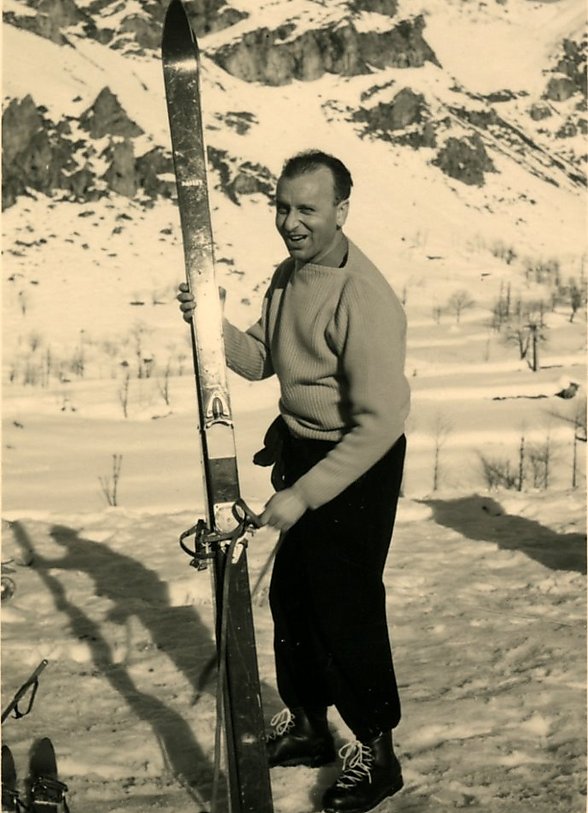
At the age of 98, about 75 years after saving the lives of hundreds Jewish refugees in northern Italy during the German occupation, Enzo Cavaglion has been officially honored with the Jewish Rescuers Citation. The citation was presented to him last week in the country where he was born, lived all his life, fought the Nazis and saved fellow Jews.

Cavaglion helped more than 1,000 Jewish refugees who had sought refuge after fleeing the remote Italian-occupied French Alpine village of Saint-Martin-Vesubie in the face of the German army that invaded the area following the announcement of the armistice signed between Italy and the Allies.

Enzo Cavaglion receives the citation from Alan Schneider. Proud and excited

Enzo Cavaglion receives the citation from Alan Schneider. Proud and excited

The Jewish Rescuers Citation, which he received on January 21 from B'nai B'rith World Center-Jerusalem and the Committee to Recognize the Heroism of Jews who Rescued Fellow Jews During the Holocaust, has been presented in an effort to correct the public misconception that Jews did not rescue fellow Jews during the Holocaust.

Cavaglion, who was in his 20s at the time, was one of the 14 founding members of partisan group “Italia Libera” (Free Italy), led by anti-Fascist lawyer Duccio Galimberti, which was established on September 12, 1943—the same day that Cuneo, Italy was occupied by the German First SS Panzer Division.

They group members ensconced themselves in the sanctuary of the Madonna del Colletto, 18 kilometers to the west of Cuneo. Enzo and his younger brother, Riccardo Cavaglion, stayed with the group until October 1943, when they had to leave to help their own families escape arrest in Cuneo.

In addition to the combat they waged against the Germans and Italian fascists, Enzo and Riccardo also helped Jews who sought refuge in villages around Cuneo, putting their own lives at risk.

Men, women, children, the elderly and disabled scaled the Maritime Alps over the international border into Italy in a harrowing ordeal, only to find the Germans already roaming the area. About 300 people were captured and sent to Auschwitz. The remaining 700 found refuge among the welcoming local peasant population. Enzo and Riccardo found hiding places for them, furnished them with the necessary documents and hid them in the mountains in order to evade the Nazis.

Enzo Cavaglion (Photo courtesy of Ghetto Fighters' House)

Enzo Cavaglion (Photo courtesy of Ghetto Fighters' House)

Holocaust Survivor Harry Burger credited Enzo and Riccardo with saving his life and his mother’s life by warning them that the Nazis were hunting for them.

Survivor Alfred Feldman wrote in his memoir, “One Step Ahead: A Jewish Fugitive in Hitler’s Europe,” that he witnessed a daring theft of identity cards by Enzo and Riccardo from the mayor’s office in Vignolo, Italy, that were then falsified and distributed to some of the refugees. Enzo performed all of these activities despite the additional danger he faced as a result.

The citation was presented to Cavaglion in his home, and the event was followed by a ceremony at the Cuneo synagogue. Speakers included Enzo’s son, Dr. Alberto Cavaglion, and B'nai B'rith World Center Director Alan Schneider.

“It’s a privilege to award you with the Jewish Rescuers Citation, continuing our 20-year effort to correct the historical narrative that Jews did not work to rescue other Jews during the Holocaust,” Schneider told Cavaglion.

Enzo said he was proud and excited to receive the citation. He had tears in his eyes as he remembered the Jews he had met and helped on the Italian side. After the war, Cavaglion remained in Italy, where he and his brother Riccardo owned a carpet store for many years.

Since its establishment in 2011, nearly 200 heroes have been honored with the Jewish Rescuers Citation for rescue activities in Germany, France, Hungary, Greece, Slovakia, Yugoslavia, Russia, Lithuania, Poland, Holland and now Italy.

Let's block ads! (Why?)

The Jew who saved hundreds of Jews from the Nazis : http://ift.tt/2FHnFyH

The only Jew to survive the 1941 Odessa massacre

"A man who does not smoke or drink will die healthy," Mishka Zaslavsky quotes a well-known Odessa proverb with a chuckle. He began his morning with a small glass of vodka, but he quit smoking 30 years ago, because of the health risk. He can climb up and down the 80 steps to his fifth-floor apartment in the Cheriomoshka neighborhood in Odessa with relative ease. Impressive, because he is 93 years old.

It is bitterly cold outside—minus 14 degrees. A thin layer of snow covers the back yards of destitute Soviet-era homes. Zaslavsky politely refuses everyone who extends a hand to help and climbs into the high car by himself. A year ago, he adopted a new look that gives him charm and attractiveness. "I'm young," he laughs and he runs his hand through his white ponytail. "Today, young men are growing out their hair." Despite the style, he is not young, but his mind is sharp, fresh, and refuses to be despondent.

He was born in Odessa in October 1925. His mother Miriam, who was raised in a deeply religious home, summoned the mohel twice. Twice, his father, Abraham, sent the mohel back from whence he came. He refused to have his eldest son circumcised, because he had abandoned religion following the horrors of the First World War. The father's stubbornness saved his son in the Second World War.
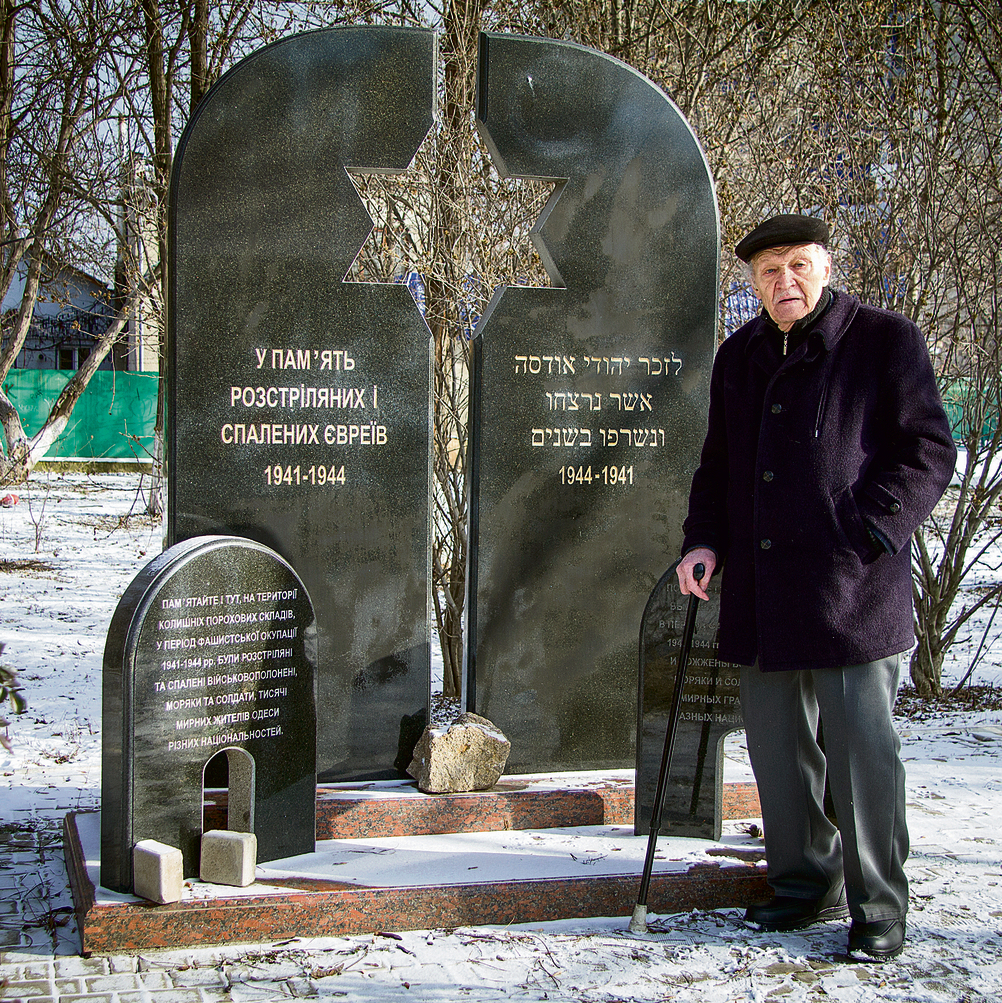
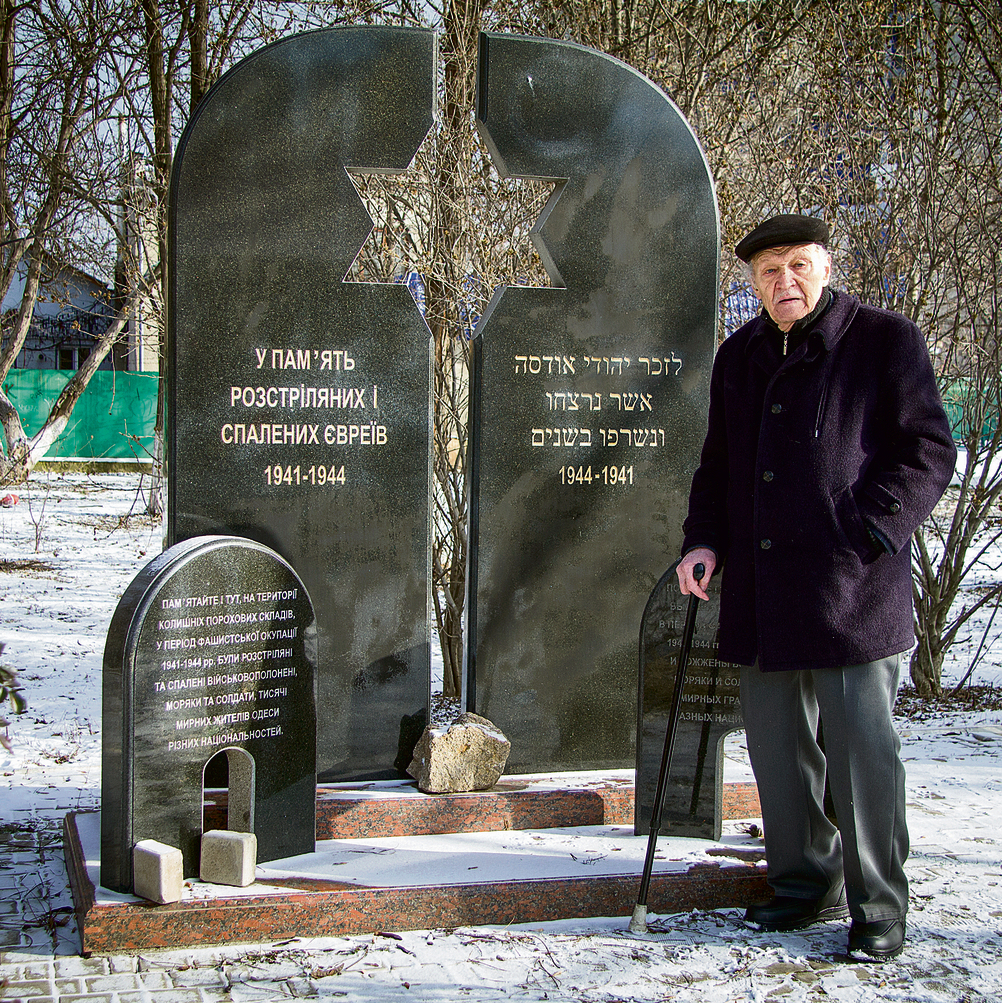
Mishka Zaslavsky at the monument for Odessa's Jews

Mishka Zaslavsky at the monument for Odessa's Jews


"I was 16 when the Nazis conquered Odessa," related Mishka. "Dad was drafted into the Red Army, and my mother, with five small children, could not escape to the east. On October 16, I saw my first Nazi soldier."

At the time, Odessa was known as an important center of Judaism and Zionism. 100,000 of the city's Jews were able to escape before October 16, 1941, when the German army and their Romanian allies captured the city. About 90,000 Jews were still in the city. Odessa was severed from Ukraine, then a part of the Soviet Union, and declared the capital of Transnistria, territory that Hitler ceded to Romania. The Einsatzkommando, a Romanian intelligence company, and local Ukranian militias succeeded in murdering more than 10,000 Jews in the first few days of the occupation.

"On October 19, a soldier came to our house and told us to get ready within 20 minutes. I remember my mother's helplessness. How are you supposed to pack for five children in 20 minutes? We went outside with my younger siblings and a few baskets. All the Jews were removed from the adjacent buildings, and we were collected together, about 3,000 people, overnight, at the school. In the morning, we were taken from there, escorted by barking dogs and murderous blows, to the city's central prison."

The prison, built of red bricks during the Tsarist era, still stands in the heart of Odessa. During a tour of the city, Mishke points to it and to the route they marched. "There was a very long line, mostly women, children, and the elderly," Mishka remembers. "It was hot. Locals watched the scene from both sides of the street. There were women who wept, but there were those who stole objects and shouted, 'You deserve it, zhids!' At the prison, 18 people were put in cells meant for one. No food or water were brought to us. I remember the women's cries of terror."

Numerous testimonies tell of women and girls who were taken from the cells to the prison roof, where they were brutally raped by Romanian soldiers.

On October 22, the Romanian HQ was blown up, apparently by a mine that was planted there by the Soviets before the German-Romanian occupation. The blast killed 66 military personnel and the city's military governor. In response, the Romanian ruler, Marshal Ion Antonescu, ordered the execution of 200 communists for every officer killed and 100 for every enlisted man. In Nazi-Romanian eyes, communists meant Jews. About 5,000 Jews were shot that same day, and thousands of them were hanged in main city streets, left there for several weeks. The hangings are etched into the memories of every survivor we met, even those who were only young children at the time.

The hangings and abuse did not diminish the Romanians' fury. "The next day, October 23, they took us from the prison in a convoy for several kilometers to the munitions bunkers," Mishka remembers. "We walked very slowly. Every time we stopped, the elderly were beaten. It is hard to remember. When I remember, I weep," he says, dropping for a moment his tough façade to wipe away the tears that well up in his blue-grey eyes.

"I walked with my five-year-old brother Alik on my shoulders. Mom carried the one-year-old Hanna, and two sisters, Yava and Zhenia, walked with an aunt. The moment we reached the gate in the bunkers' fence, I felt someone yank Alik from me. I tried to hold onto him, but I was beaten and shoved. The few men and youths, together with wounded prisoners of war, were put into the farthest bunker and separated from the women and children. There were high guard towers with soldiers. The Romanians brought trucks with fuel tanks and sprayed the outside of the bunkers with gasoline."

22,000 Jews and wounded prisoners of war were put into the huge bunkers, which had been built in the Tsarist era on the edge of the city. So far as is known, all were burned alive, except for Mishka.

"The fire took hold of the roof and burned a hole through it. I began to push and climb up. I've been told that it is not nice to say that I shoved (people), but that's the reality. I shoved and everyone else shoved, too. A few more men and youths were able to get out of the bunker and climb the fence. The roar of the fire was incredible. It was terrifying. I jumped over the fence. The soldiers in the guard towers began shooting at everyone who fled. They didn’t hit me. I jumped into a cornfield and crawled. I could not help but look back. What did my one-year-old sister do to deserve to die like that?"

By November 3, 1941, Odessa's remaining 40,000 Jews were gathered into the Slobodka Ghetto. After wandering around, Mishka also ended up there. Later, Jews from the ghetto were sent out to bury the burned corpses.

Mishka escaped from the ghetto, and used forged papers to survive for a long time as an employee of the city's power station.

"Every time someone suspected I was a Jew, I showed the natural identity card that was left on my body thanks to my father. That is how I survived," he says, referring to the fact he was uncircumcised.

Later, after someone informed on him, he was arrested and forced to admit his true identity. He was sent back to prison.

He escaped with the help of an Ukranian woman who brought him food when he was put to work cleaning streets outside the prison. He nicknamed her "Aunt Mora," and she hid him in her home.

On April 10, 1944, when he was 18.5, the Red Army liberated Odessa. Mishka immediately decided to enlist. "I could have stayed in Odessa, but I wanted to avenge the death of my family. We were given new uniforms and underwent training," he explains.

Just before being sent to the front, his father found him, having returned from the battles to the family home, where he found strangers living. "Dad found me. We hugged and I told him everything. We smoked a cigarette together; I was already a man, not a boy. We both cried. That was it. We had to go forward."

His father stayed in Odessa to live with an aunt, and Mishka went to the front. He helped liberate six countries and reached Berlin. He was wounded twice by bullets, once in the right leg and once in the left.

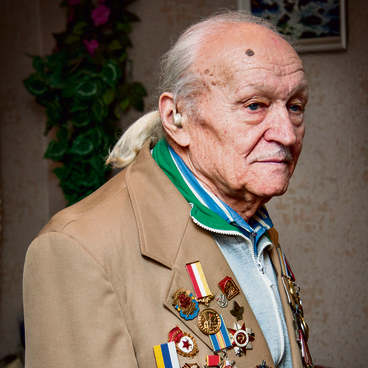
"And they say the Jews did not fight," he complains, pulling a jacket heavy with medals from the closet. "The Red Army did not always treat the Jews well, calling them traitors."
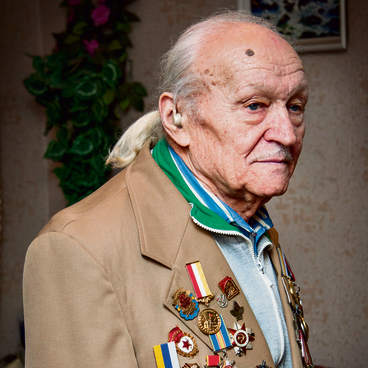
Zaslavsky with his long hair and medal-laden jacket

Zaslavsky with his long hair and medal-laden jacket

When he returned home, he married Ira, who passed away 28 years ago. He led a full life in Odessa working as an electrician and raised a family.

There are no other survivors known from the massacre in Odessa, except for Mishka. Detailed documentation of the mass burning can found in official Romanian documents. During the Soviet era, a neighborhood was built over the site of the bunkers. The sole commemoration of the atrocity was a small monument with general text about the killing of Soviet citizens by the Nazis.

"Shameful. It would have been better to say nothing. We argued with the authorities. We demanded to move a building and a utility pole. In the end, the area was excavated and the mass grave was found," he says, pointing to the plaza around the new monument. "The entire neighborhood is built on bones. We ultimately raised money and built a proper monument here."

Mishka's "we" is the Odessa Holocaust Survivors Organization, which was founded in 1990 by 2,500 survivors and 170 non-Jews who were recognized as Righteous Among the Nations for their efforts to save Jews during the Holocaust. Today, 340 survivors are still alive in the city, mostly children who survived in hiding, and eight Righteous non-Jews.

The survivors and rescuers jointly built a fairly unknown museum, which relates the story of the Holocaust in Odessa. The museum includes a model of the burning bunkers.

"The government gave us a very dilapidated building," says Mishka. "I was already 80, but I personally broke walls, and, as an electrician, built the museum with my comrades. I was a member of the management team for over a decade. All of us donated money for the museum to open and for free entry. Most of the survivors struggle financially, especially now given the crisis in Ukraine. But we'd sell our clothes so the museum can continue to operate. I recently resigned and passed the baton to younger survivors.

"Every year, on January 27, International Holocaust Day, we organize a ceremony in the park were the Jews were assembled before being sent on death marches. Over the past five years, since the day was declared by the UN, the Odessa Municipality has finally participated in the ceremony as well. We won't let it be forgotten. That is why we are here."

The museum, like many other Jewish institutions in the city, is a target for anti-Semitic vandalism. When the glass windows were broken, they were replaced with metal ones. Neo-Nazi slogans in the "Jews out" style are spray-painted near the museum regularly.

Over the generations, most Ukranian Jews took the hint and chose to leave. But many still remain, mostly elderly and childless. About 180,000 elderly Jews, many of them Holocaust survivors, live all over the former Soviet Union. Not much is left of the welfare system of the communist regime that once ruled there and the elderly live on meager pensions.

Although Holocaust survivors recognized by the Claims Committee receive financing from the German government and Swiss banks, it is not enough to live on because of the economic crisis and soaring electricity and water rates. Today, Ukraine is the poorest of the former Soviet republics, because of the civil war in the east.

A number of organizations are trying to help them, including the International Fellowship of Christians and Jews, which hosted me in Odessa. Through the American Jewish Joint Distribution Committee and Chabad, the fellowship currently helps about 17,000 Holocaust survivors in Ukraine, providing security, distributing food and medicines, organizing community activities, and offering individual home care for the elderly.

"I don’t know if Israel or Jewish communities around the world understand how difficult the conditions are. Something must be done," says International Fellowship of Christians and Jews President Rabbi Yechiel Eckstein.

"Over the years, I have made countless visits to Ukraine and elsewhere, and I was horrified by the distress. Many Jews live in remote villages that take five hours to reach because the roads are blocked and unfit for travel. There are survivors who live on the fifth floor without an elevator. Most people in these circumstances simply don’t leave their homes for years. Many survivors live in utter isolation and really depend on us and our partners for their basic needs, such as food and medicine. We raise about $25 million a year from Christians in the US who want to help Jews from one of the largest communities in the world, which is also one of the poorest in the world.

"It hurts me that Jewish communities that thrive in the US, Israel, and elsewhere donate very little to this endeavor. There are about 70,000 elderly Jews in former Soviet republics that no organization has yet reached, because there isn’t enough money. This situation is shameful on the Jewish people. On International Holocaust Remembrance Day, it is important to remember other holocausts, but no less important to strive that the remaining survivors can live out the rest of their days with dignity."

Mishka is lucky in that he can still live with dignity. For our meeting, he allows himself to play the actor, like his grandfather. "Before the revolution, my grandfather was in the Jewish theater in the shtetl. He wrote and sang songs in Yiddish and Russian."

Mishka stood up and began to sing in Yiddish, "I dream of the day when Jews can be free like all people."

Jews are free in Israel. Why didn’t you make aliyah?

"My homeland is here. There are good people here like Aunt Mora," he shouts. "There are good and bad people everywhere. I choose to believe in the good people. No one can remove me from here. My victory over the Nazis is my four Jewish great-grandchildren. But I won't leave here. If I go, who will protect the bones of my family?"

Let's block ads! (Why?)

The only Jew to survive the 1941 Odessa massacre : http://ift.tt/2nzu6NE
Friday, February 2, 2018

Holocaust survivor, US lawmaker Lantos gets Budapest statute

A statue of Hungarian-born US Rep. Tom Lantos, the only Holocaust survivor ever to serve in the US Congress, was unveiled Thursday in Budapest as those attending praised the man known for his advocacy of democracy and human rights around the world.

A California Democrat in office from 1981 until his death in 2008, Lantos frequently visited his homeland, often warning against anti-Semitism while also supporting Hungarian minorities in neighboring countries. "During his whole life, his heart was in Hungary," said his widow Annette, speaking at the unveiling ceremony on what would have been Lantos' 90th birthday.
Rep. Lantos's statue was unveiled in Budapest Thursday (Photo: AP)

Rep. Lantos's statue was unveiled in Budapest Thursday (Photo: AP)

The top US diplomat in Hungary remembered Lantos as "Hungarian by birth and a dedicated American by choice" who worked to build consensus and strengthen relations between the two countries. "Tom Lantos called on all of us—not just those in government service, but all citizens, all human beings—to show courage in the face of fear, to smooth difficulties and correct mistakes," said David Kostelancik, the charge d'affaires at the US Embassy. "He called on us to remember that the very essence of our civilization, the belief we hold most dear, is the inherent dignity and worth of every single person." During World War Two, the teenage Lantos, like many other Jews, was sent to a forced labor camp, this one not far from Budapest. He escaped but was caught and severely beaten, escaped again and managed to survive the final stages of the war with relatives in a Budapest safe house set up by Swedish diplomat Raoul Wallenberg, who helped save the lives of thousands of Hungarian Jews by issuing Swedish diplomatic passes.
The late Holocaust survivor's family was present at the ceremony (Photo: AP)

The late Holocaust survivor's family was present at the ceremony (Photo: AP)

 Lantos joined Wallenberg's anti-Nazi underground network, carrying messages, food and medicines around the Hungarian capital. After the war ended, Lantos found out that his mother and other relatives had been killed in the Holocaust. At just 19, he arrived in the United States in 1947 on an academic scholarship. In 1983, Lantos co-founded the bipartisan Congressional Human Rights Caucus, which after his death was renamed the Tom Lantos Human Rights Commission. In 2011, the Hungarian government and the US Senate established the Budapest-based Tom Lantos Institute, a research institute and think-tank focusing mainly on Jewish and Roma issues. In a video during Thursday's ceremony, former US Vice President Joe Biden recalled being Lantos' guest in Hungary and said he often cited a Lantos quote in his own speeches—"The veneer of civilization is paper thin. We are its guardians, and we can never rest."
 (Photo: AP)

(Photo: AP)

 The bronze statue with a special red patina, depicting a slightly larger-than-life Lantos sitting on a bench with his favorite dogs, was created by Mamikon Yengibarian, a Budapest-based Armenian sculptor. It was placed on Tom Lantos Promenade in Budapest's 13th district, near his high school, the Berzsenyi Daniel Gimnazium. Yengibarian said he wanted to show "a magnificent, brilliant man who is not afraid ... and fights for justice and humanity until the end."

Let's block ads! (Why?)

Holocaust survivor, US lawmaker Lantos gets Budapest statute : http://ift.tt/2nwy89h

Thursday, February 1, 2018

Iceland set to ban circumcision

A bill submitted this week to the Icelandic parliament is calling for the banning of circumcision and sets the penalty for violators at six years in prison.


Senior European rabbis are fuming at the legislative initiative and are calling on Jewish communities on the continent to apply international pressure in order to prevent the bill's adoption and ensure freedom of religion.

Iceland has no official rabbi. The Chief Rabbi of Denmark Yair Melchior and the Rabbi of Oslo, Yoav Melchior are leading the campaign. They say that the bill was sponsored by deputies of five parties, from the coalition as well as opposition, who describe circumcision as a violation of the rights of the child.
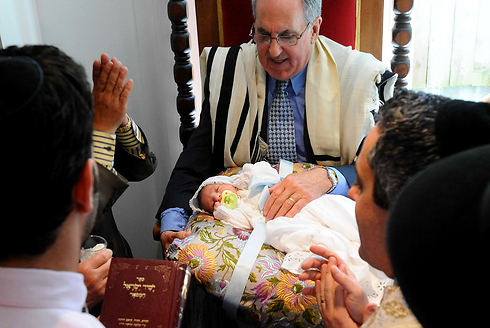
Circumcision (Photo: AP)

Circumcision (Photo: AP)

"As it looks now, the bill has a high chance of passing," wrote the Melchior brothers. "Iceland does not have a significant Jewish or Muslim population; therefore there are hardly any opponents to the bill. Only considerable international pressure can help" The rabbis are requesting that European and worldwide Jewish communities contact their local Icelandic representatives and make their protests known. Iceland is one of the most secular countries in the world; therefore, it is advised to do so via political leadership, not religious.

The rabbis stressed in their letter that "There is no country in the world now that bans circumcision. This sets a dangerous precedent that may affect other countries; the Danish parliament is now considering such a bill as well."

The European Conference of Rabbis declared its concern regarding the bill in Iceland and in other countries.

"Circumcision is a critical part of Jewish life and no authority in the world can forbid Jews from carrying out this commandment," they explained.

The group's President Rabbi Pinchas Goldschmidt added that "although the Icelandic Jewish community is small, we cannot ignore the dangerous precedent that this law can set and the consequences that such legislation can cause in other countries.

"We call on lawmakers to immediately rescind this miserable piece of legislation and continue supporting Jewish life without limits."

Female circumcision has been banned in Iceland in 2005. The current bill's supporters claim that the rights of the child come before the parent's right to raise their children as they see fit.

The Independent reported that upon reaching the age of consent, which for sexual relations is set at 15 in Iceland, the child would be permitted to perform a circumcision. Eight parliamentarians from across the political spectrum have signed the proposed bill. It was initiated after Danish doctors advised against circumcising boys below the age of 18.

Let's block ads! (Why?)

Iceland set to ban circumcision : http://ift.tt/2DSBU2N

Search

Featured Post

JAX firefighters find Jaguars star Travis Hunter at the scene of a call last week - Action News Jax

[unable to retrieve full-text content] JAX firefighters find Jaguars star Travis Hunter at the scene of a call last week    Action News Jax ...

Postingan Populer