[unable to retrieve full-text content]
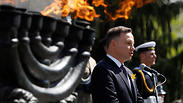
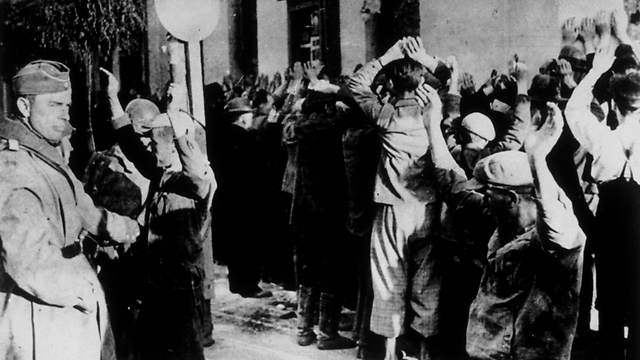
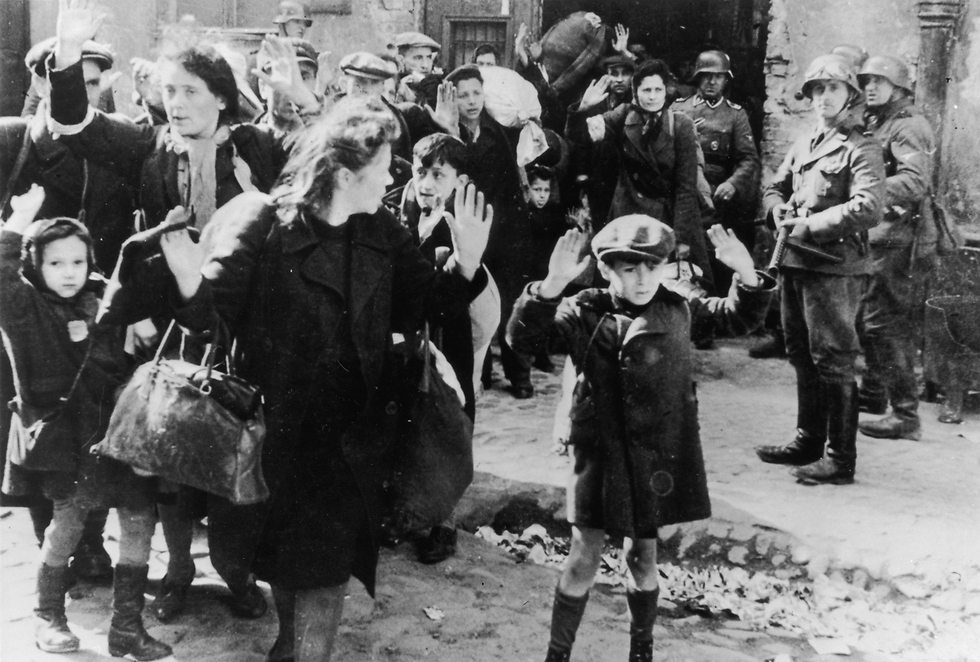
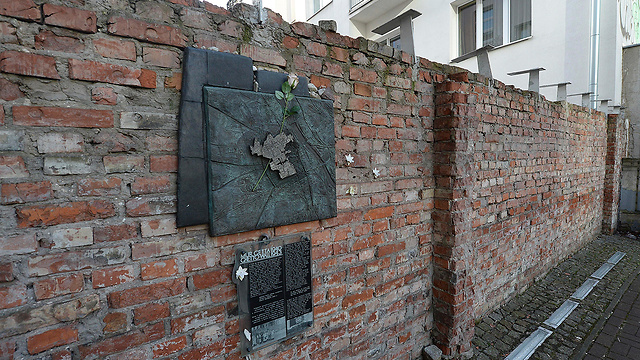
75 years after the Warsaw Ghetto Uprising, Poland holds a day of commemoration, taking a moment of silence to remember those who fell, as well as the millions of others slain in the Nazi Holocaust. Poland marks 75th anniversary of uprising in Warsaw Ghetto : https://ift.tt/2qJHm2ERechercher dans ce blog
Wednesday, April 18, 2018
WATCH: Jewish man attacked by Muslim man in Berlin
[unable to retrieve full-text content]

Video shows Muslim man hitting young Jewish man with a belt, yelling 'Jew' at him in Arabic; police launch investigation into incident, victim had to seek medical treatment at the hospital. WATCH: Jewish man attacked by Muslim man in Berlin : https://ift.tt/2J1QmIgFriday, April 13, 2018
Childhood Holocaust survivors reunited after 76 years
[unable to retrieve full-text content]
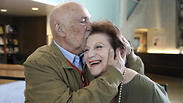
Alice Gerstel and her Jewish family were hidden for 2 weeks in the home of the Gronowski family in Brussels, and were smuggled out by the Jewish family she thought had been murdered; decades later, she is reunited with one of the family members who jumped off a train to Auschwitz. Childhood Holocaust survivors reunited after 76 years : https://ift.tt/2GV3L8dWednesday, April 11, 2018
Jews who fought Nazis recall struggle
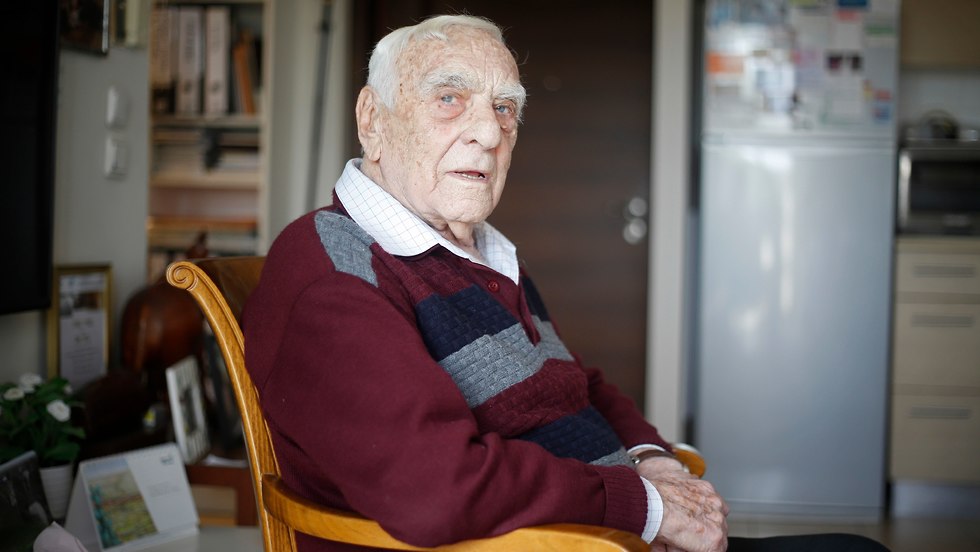
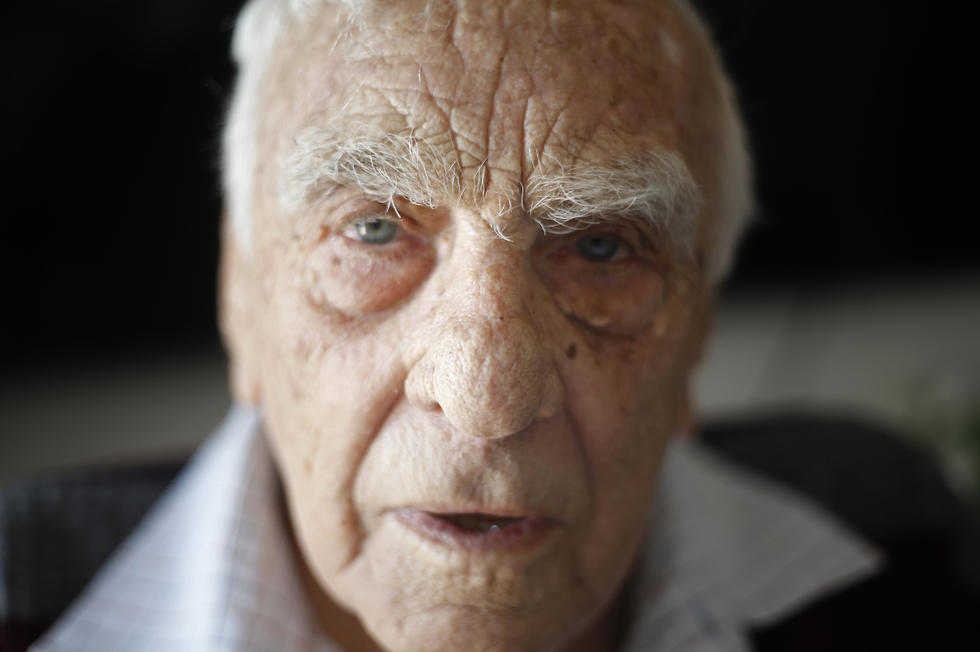
While most of his fellow Jews were being killed or brutalized in Nazi death camps and ghettos, Baruch Shub and his friends were hiding in the forests of the former Soviet Union, trying to undermine the Nazis by derailing trains, burning bridges, sabotaging communication lines and killing the occasional collaborator.
"You couldn't really fight the German army, given our means, but we did our best to disrupt them," recalled the 94-year-old Shub at his retirement home in central Israel. "Whether or not it made a difference, I don't know. But it gave me a great sense of joy that at least I was doing something to get even with them." As Israel marks its annual Holocaust memorial day, those aging survivors who actively resisted and helped shape the country's fighting spirit are quickly disappearing. Shub is among perhaps only a handful of remaining Soviet partisan fighters. Only two remain from the greatest symbol of resistance of all—the 1943 Warsaw ghetto uprising. Israel will come to a standstill Thursday for its annual remembrance of the Holocaust's 6 million victims. It falls on the same date on the Hebrew calendar as the Warsaw uprising—the ultimately doomed revolt that played such an important role in defining the country's psyche. Even the day's official name—"Holocaust and Heroism Remembrance Day"—alludes to the image of the Jewish warrior upon which the state was founded.The conditions for resistance were limited, Shub said, given the all-encompassing scope of the Nazi genocide, but those who could fight back did so. With their actions, he said they continued a tradition dating back to biblical times.
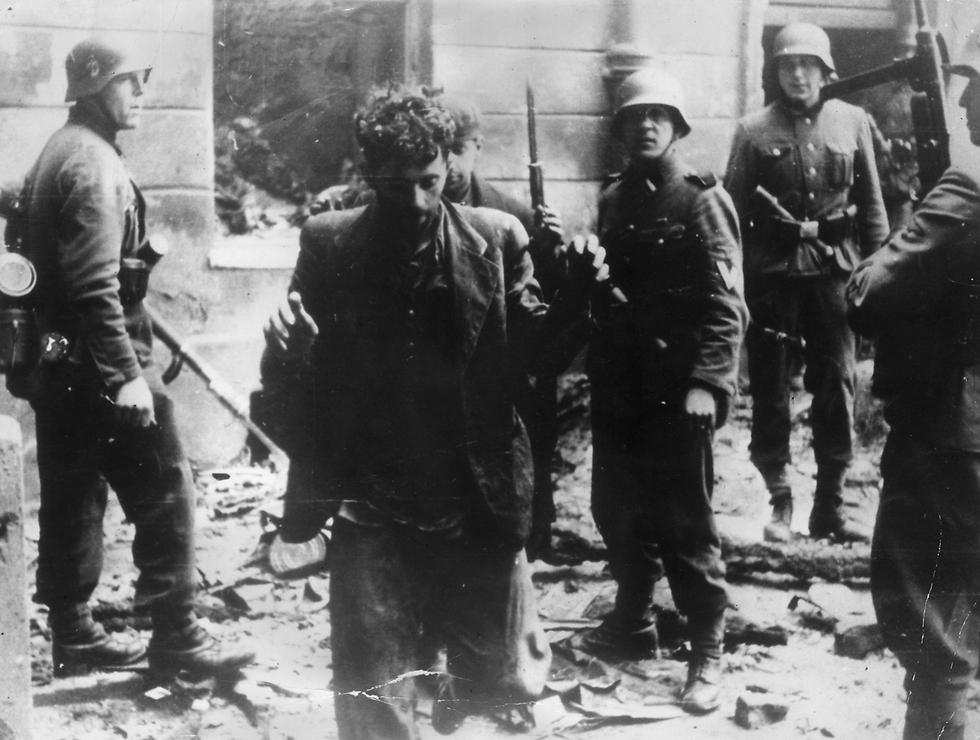
"Jews always fought for their survival and national honor," he said. "I want history to remember that Jews did not walk like cattle to their slaughter." Shub's mother and three siblings were murdered by Nazis and their local collaborators in his native Lithuania. After a failed uprising in the Vilna ghetto, he escaped to the forests to join the underground network led by famed resistance fighter Abba Kovner. Four battalions of Jewish fighters raided villages for food and supplies and hacked away at communication and electricity lines used by German forces, he said. After the Red Army liberated the ghetto in what is now called Vilnius in 1944, Shub returned to find all its Jews killed by Nazi SS troops. Among the bodies strewn on the street was that of his father. A blood-soaked note in his hand, written in Yiddish, said, "If anyone sees my son, tell him to take revenge." Israel's identity is defined by the axiom that never again will Jews be helpless in the face of annihilation. But Shub fears that message is being lost. He is angered that a planned museum to honor Jewish fighters, along with the 1.5 million Jewish World War II veterans, has been bogged down in bureaucratic delays for more than a decade. Dina Porat, chief historian at Israel's Yad Vashem memorial, said that thanks to the many books, films and collected testimony, there is little danger of their legacy being erased. Still, the live witness accounts pose a powerful rebuke to the current wave of historic revisionism in several eastern European countries to play down their own wartime complicity. Survivors have been outraged by a Polish law criminalizing the blaming of Poland for crimes committed by Germany during the Holocaust. Lithuania also has recently pushed for legislation to prohibit the sale of books that "distort Lithuanian history" by mentioning its complicity. Lithuanian authorities have launched investigations into the partisans' wartime activities and accused Yitzhak Arad, a former chairman of Yad Vashem, of killing Nazi collaborators who are regarded today as Lithuanian heroes for opposing communism. The charges were later dropped. "There is a process of rewriting history in these places," said Arad, 91, who blew up 16 German supply trains as a teenager. "We are fading away, so it will be up to the next generation to continue this battle with the tools at their disposal." There are even fewer who remain from the single greatest act of Jewish resistance during the Holocaust, which wiped out a third of world Jewry. Though guaranteed to fail, the Warsaw ghetto uprising symbolized a refusal to succumb to Nazi atrocities, and inspired other uprisings and underground resistance by Jews and non-Jews alike. Three-quarters of a century later, only 89-year-old Aliza Vitis-Shomron is left in Israel to tell the story. The only other known surviving fighter, Simcha Rotem, is in ill health. Vitis-Shomron said the hardest moment was fleeing just before the Nazis vanquished her comrades. They had few weapons and it seemed pointless to keep around a teenage girl who could escape and tell the world what had happened. "They said I was too young to die," said Vitis-Shomron, who has three children, seven grandchildren and four great-grandchildren. "I still feel guilty that I got out and they stayed." Along with her mother and younger sister, she found a cellar to hide in outside the ghetto. She vividly remembers poking a hole in the curtain and watching the red skies above the burning ghetto where her friends were waging war. The resistance movement began to grow after the deportation of July 22, 1942, when 265,000 men, women and children were rounded up and later killed at the Treblinka death camp. As word of the Nazi genocide spread, a small group of rebels began spreading calls for resistance, carrying out isolated attacks and sabotage. The Nazis entered the ghetto on April 19, 1943, the eve of the Passover holiday. Three days later, they set the ghetto ablaze, but the Jewish fighters kept up their struggle for nearly a month, fortifying themselves in bunkers and managing to kill 16 Nazis and wound nearly 100. Vitis-Shomron said that Mordechai Anielewicz and other fair-looking leaders of the revolt had ample opportunities to escape. "They are the real heroes, the ones who stayed knowing they would die," she said. "They had daring and a will to avenge the Nazis and prove that the Jewish people did not surrender. There were those who fought back." Jews who fought Nazis recall struggle : https://ift.tt/2GSKr7AReport: Anti-Semitism rises, but violence against Jews falls
Violent attacks on Jews worldwide dropped in 2017 despite a rise in other forms of anti-Semitism, researchers reported Wednesday, in a year characterized by normalization and mainstreaming of anti-Semitism not seen in Europe since World War II.
Researchers at Tel Aviv University said assaults specifically targeting Jews fell 9 percent last year. They recorded 327 cases compared to 361 in 2016, which had already been the lowest number in a decade.But they noted attacks were far more brazen and brutal. Most dramatic were a pair of cases in France, where a Jewish woman was thrown to her death out of her apartment window and a Holocaust survivor was stabbed and burned to death in her Paris home.
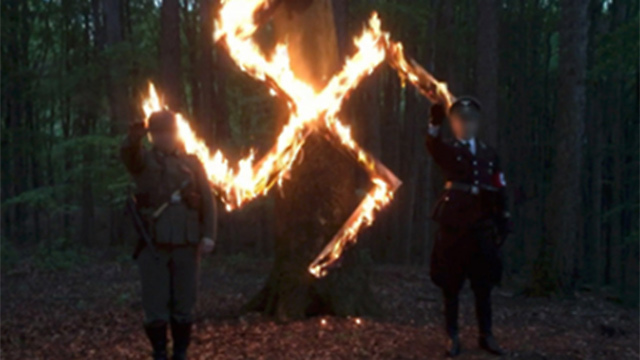
The decline in anti-Semitic incidents, the researchers explained, is because there are "less Jews with skullcaps and Stars of David."
Threats, harassment and insults have also driven thousands of French Jews to relocate."Neither the public nor the private space is perceived as safe for Jews," said Moshe Kantor, president of the European Jewish Congress, an umbrella group representing Jewish communities across the continent. "The general feeling shared by Jews, as individuals and as a community, is that anti-Semitism has entered a new phase, and is widespread in most parts of the world."
According to the report, Jews feel less safe and are less inclined to identify as Jewish in public. "Jewish parents in Europe have to deal with explaining to their children that eventually there would be no choice but to leave public schools and move to Jewish institutions," Kantor said.
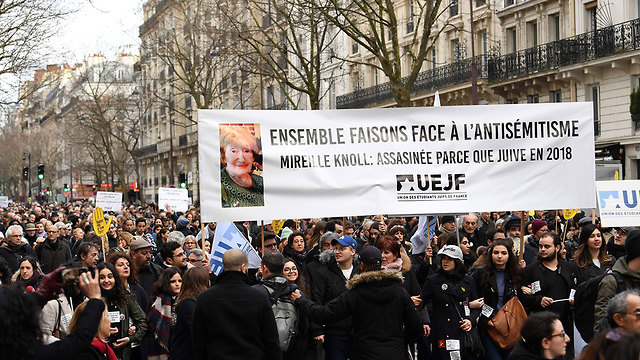
Rally against anti-Semitism and in memory of Mireille Knoll, a Holocaust survivor murdered in her home in Paris (Photo: AFP)
Tel Aviv University's Kantor Center for the Study of Contemporary European Jewry releases the report every year on the eve of Israel's Holocaust memorial day, which begins Wednesday at sundown.
Increased security measures are credited with reducing violence, but it may be masking a trend of anti-Semitism becoming more mainstream and acceptable, particularly in European politics. The report described a toxic triangle made up of the rise of the extreme right, radical Islamism and a heated anti-Zionist discourse on the left accompanied by anti-Semitic expressions. "The religious dimension of classic, traditional anti-Semitism has returned, and the term 'Jew' has become an insult," Kantor said. He noted that the majority of anti-Semitic incidents still went unreported, either out of fear of retribution or a lack of interest on the part of local authorities. Despite the overall drop, anti-Semitism rose in many places globally. In Germany, home to the world's fastest growing Jewish community, there was a rise in anti-Semitic acts from 644 in 2016 to 707 in 2017. Among these were 24 violent cases in 2017, compared to 15 the year before. Kantor also said that the ascendancy of British Labour Party leader Jeremy Corbyn led him to believe that "the banality and normalization of Jew-hatred has reached the highest levels." Critics say Corbyn, a longtime critic of Israel, has long allowed anti-Jewish prejudice to go unchecked. Corbyn's supporters have been accused of sharing Holocaust denial and international Jewish banking conspiracies on social media. On Tuesday, Israel's Labor Party suspended its ties with Corbyn over his party's expressions of anti-Semitism. The year was also marked by the deadly white supremacist rally in Charlottesville, Virginia—where demonstrators used the Heil Hitler salute, donned swastikas and chanted slogans such as "Jews will not replace us." Far-right parties gained strength following elections in Germany and Austria. US President Donald Trump's December recognition of Jerusalem as the capital of Israel also set off demonstrations that were used as a pretext to attack Jews with anti-Semitic slogans, including calls for murder. The report cited an audit of the Anti-Defamation League that found anti-Semitic incidents in the United States rose 57 percent in 2017—the largest single-year increase on record and the second highest number reported since the ADL started tracking such data in 1979. The sharp rise was due in part to a significant increase in incidents in schools and on college campuses, which nearly doubled for the second year in a row. The rising threat appears to be drawing growing interest.Israel recently hosted a global forum to address the various ways of combatting anti-Semitism that drew experts from around the world. Israel's Yad Vashem Holocaust memorial says there has been wide participation in its recently launched online course on the origins of anti-Semitism.
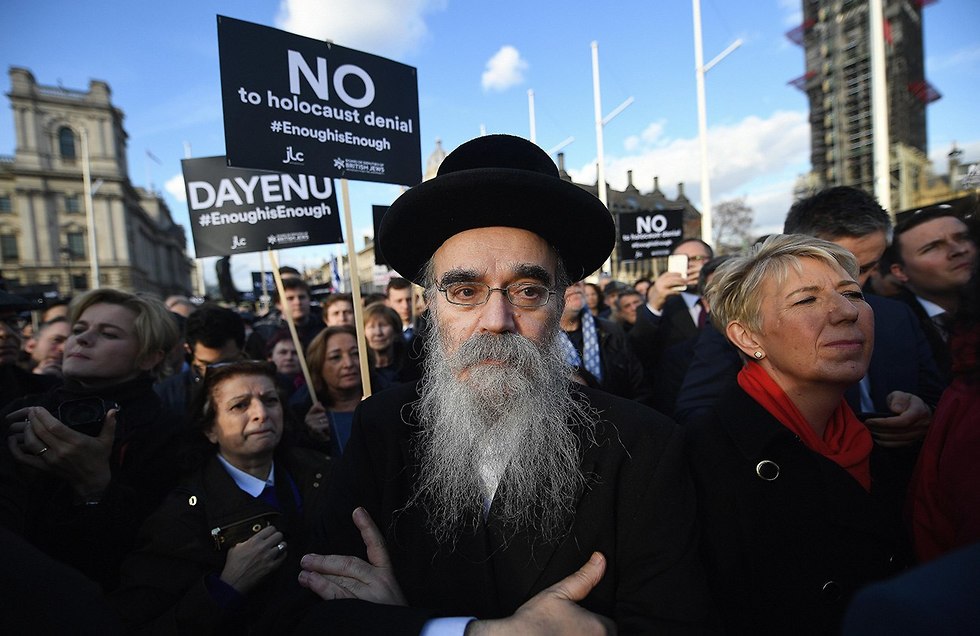
Baruch Adler, the deputy chairman of the annual "March of the Living," explained why the march is still important and relevant in 2018.
"In France, Jewish-owned stores are being burned again, in eastern Europe the voices of anti-Semitic politicians grow stronger, and new laws seek to limit the truth. In enlightened states in the US, there are neo-Nazi power displays without any no shame, while at the polls the voices calling to go back in time to authority, homogeny and fascism are gaining in strength," Adler said.
Adir Yanko contributed to this story.
Report: Anti-Semitism rises, but violence against Jews falls : https://ift.tt/2GOinX3Number of Jews in the world still lower than before Holocaust
The number of Jews in the world is still lower than it was in 1939, prior to the Holocaust, according to figures released Tuesday by the Israel Central Bureau of Statistics.
According to the data, there are currently 14,511,000 Jews living in the world, compared to 16,600,000 on the eve of World War II.
This number is similar to that in 1922, 96 years ago, when 14 million Jews lived worldwide. Today, most Jews live in Israel and the United States. The data of the Central Bureau of Statistics are based on information gathered by the Division of Jewish Demography and Statistics and the A. Harman Institute of Contemporary Jewry of the Hebrew University of Jerusalem, which relate to 2016. The data indicate that there are currently 6,446,000 Jews in Israel, 5,700,000 in the US, 456,000 in France, 390,000 in Canada, 290,000 in Britain, 181,000 in Argentina, 176,000 in Russia, 117,000 in Germany, and 113,000 in Australia. The data also indicate that in 1939 the number of Jews in Israel was 449,000 and in 1948—when there were 11.5 million Jews in the world—there were 650,000 Jews in Israel. In other words, since 1948, the number of Jews in Israel has increased nearly tenfold.The figures further reveal that in the same period, the number of Jews living around the world (excluding Israel) has dropped from 10.8 million in 1948 to about 8 million in 2016. In fact, the Jewish population in Israel and worldwide has grown by only 26 percent, while the global population has increased from 2.5 billion to about 7.5 billion people.
Number of Jews in the world still lower than before Holocaust : https://ift.tt/2JBWhorSearch
Featured Post
JAX firefighters find Jaguars star Travis Hunter at the scene of a call last week - Action News Jax
[unable to retrieve full-text content] JAX firefighters find Jaguars star Travis Hunter at the scene of a call last week Action News Jax ...
Postingan Populer
-
[unable to retrieve full-text content] John Candy’s Son Explains Devil Costume Scene in 'Planes, Trains & Automobiles' Peopl...
-
[unable to retrieve full-text content] Peddi Controversy Explained: Why A Removed Ram Charan & Janhvi Kapoor Scene Triggered Debate I...
-
[unable to retrieve full-text content] Newly released images show Karmelo Anthony at murder scene before & after stabbing KBOI ...