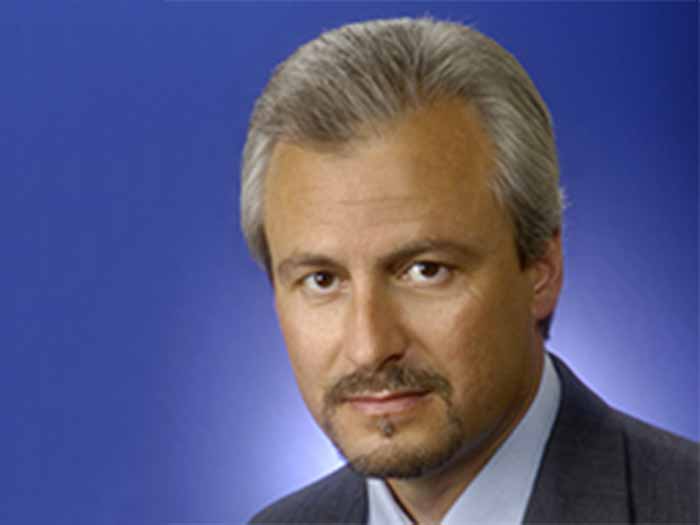
Ports of Indiana reports that Phil Wilzbacher, who has has led operations of Ports of Indiana-Mount Vernon for 19 years, will retire effective April 20.
Wilzbacher is the longest-serving port director in the statewide port authority’s 60-year history and is planning to take some time to catch up on personal to-do lists and find his next professional challenge.
“I feel very fortunate to have served as the Mount Vernon port director for 19 years, a good portion of the port’s 45-year history,” said Wilzbacher. “It’s been a privilege to work alongside an exceptional team and to conduct business with our port companies, the southwest Indiana community, other ports and industries throughout the U.S. Inland River System and global markets. The relationships developed over time have become lifelong friendships, and for that, I am grateful.”
Wilzbacher, 63, joined the Ports of Indiana in January 2002. Under his leadership, the Ports of Indiana-Mount Vernon saw record tonnage for five consecutive years, and an overall tonnage growth of 400 percent, which propelled Mount Vernon to the seventh largest inland port in the United States.
“Phil has established a solid pathway to the next level future growth and prosperity we aspire to deliver for the Mount Vernon port and Indiana,” said Andrea Hermer, COO of Ports of Indiana. “We appreciate Phil’s commitment to the Ports of Indiana and wish him all the best.”
A search for Wilzbacher’s replacement will begin immediately. Ports of Indiana-Jeffersonville Port Director Jeff Miles will act as interim director of Mount Vernon and Jeffersonville ports until Wilzbacher’s permanent replacement is hired.
The public agency that manages the tidelands around San Diego Bay is considering adjusting the way it does business. The Port of San Diego’s new master plan, a planning document ... Read more →
The public agency that manages the tidelands around San Diego Bay is considering adjusting the way it does business, essentially adding environmental justice to the Port of San Diego's master plan.
When trucks rumble through bayside San Diego neighborhoods some see economic vitality. But the economic payload comes with a cost. A cost that’s frequently paid by neighborhoods like Barrio Logan.
“Barrio Logan is in the top 5% of the areas most polluted by diesel pollution in California,” said Diane Takvorian, executive director of the National City-based Environmental Health Coalition.
Takvorian has, for 30 years, pushed Barrio Logan residents to lobby the Port of San Diego to clean up its operations. The pollution there pushes local asthma rates up to some of the worst in the state and that’s not the only health impact.
"We have some of the highest rates of COVID infections and mortality in Barrio Logan, National City, and other parts of the South Bay. So this is serious. People’s lives depend on it,” Takvorian said.
Local residents forced the port to listen as commissioners debated a contract with Mitsubishi late last year. The project would have greatly increased the number of diesel trucks driving in and out of the port's Tenth Avenue Marine Terminal.
The neighborhood spoke out and the port shelved the idea, for now.
“Over the last several years, there’s been a gradual change toward collaboration,” said Jason Giffen, the Port's vice president of Planning, Environment and Government Relations.
The agency is considering doing something that is rare because it could become one of the first ports in California to add an environmental justice element to their master planning document.
That would be a huge win for bayside communities.
“They have more than their fair share of impacts,” Giffen said. “We look at this an opportunity and we look at it as a way to guide the future together to reduce impact specifically around some of the neighboring communities around the port.”
The change would force the Port to do more than just consider economic, recreational, or public access when the agency considers projects or leases in the tidelands.
The port would have to consider how policies or projects impact nearby neighborhoods.
“We’re at a point, an inflection point, where we can set the balance for the next 30 years and really focus on improving air quality, environmental quality,” Giffen said. “And recently we’ve really seen an investment by the Port and an acceleration into advancing clean water and clean air programs at our marine terminals and also in the working waterfront.”
The port is already moving to electrify vehicles at its marine terminals.
There are efforts to move truck traffic around residential neighborhoods and there’s a push to increase access to transit.
But the environmental justice element is still met with skepticism.
“It’s a good sentiment and it’s an important goal,” Takvorian said. “But what’s really important is that they actually materialize that in the actions that they take.”
The push to keep environmental justice from being a paper change has allies on the board of Port Commissioners.
The Port's Board Chair Michael Zuchett pointed out that the port wants healthy thriving neighbors.
Clean air is a priority for him and he thinks electrification of port vehicles is an important strategy.
“We want the Port to be a leader on that front because we’re a public agency and we care about public health,” Zucchet said. “But also because those who lead on this issue will get the funding, the grant funding, the support that’s needed to make these transitions. And I want to make sure the Port’s on the front side of that.”
And the Board of Port Commissioners newest member, Sandy Naranjo from National City, wants to build on the progress that’s already happening.
“The port is shifting and I want to be, as my role as Port Commissioner, I want to push for that, so we can be leading not just in our region, but in our state, nationally,” Naranjo said.
She brings a history of community activism to the job and she is excited that the port’s master planning document will have an environmental justice element.
“This is going to be part of our operations, our lens, how we look at things is through the environmental justice lens,” Naranjo said.
Recovering from the financial hit from the COVID-19 pandemic will grab a lot of attention at the port this year, but the agency could also keep bayside neighbors in the discussion if environmental justice is part of the business equation.
Erik Anderson
Environment Reporter
I focus on the environment and all the implications that a changing or challenging environment has for life in Southern California. That includes climate change, endangered species, habitat, urbanization, pollution and many other topics.
"port" - Google News
April 02, 2021 at 07:00PM
https://ift.tt/3dINIYX
Port A wrestling thriving under Greenman's leadership | Sports | bradfordera.com - Bradford Era
"port" - Google News
https://ift.tt/2VXul6u
https://ift.tt/2WmIhpL
Witness testimony resumed Friday morning in the Derek Chauvin trial with Sgt. Jon Edwards of the Minneapolis Police Department taking the stand. Sergeant Edwards was sent to Cup Foods to secure the crime scene after police officers pinned George Floyd to the ground outside of the convenience store.
A Minneapolis native, Sergeant Edwards has been with the Minneapolis Police Department for over 10 years and serves in the department’s Third Precinct, which protesters burned last year in the wake of Mr. Floyd’s death. He is currently on leave.
Sergeant Edwards was part of the Police and Black Men project, facilitated by the University of Minnesota, which “seeks to develop relationships of honesty and trust in semiweekly meetings between a small group of police officers and African-American men,” according to the University’s website.
A guide advising how ports can make practical operational adjustments to reduce their carbon footprint has been published by the Global Industry Alliance (GIA).
The guide -- called the Ship-Port Interface Guide -- outlines eight ways to achieve a reduction in the output of greenhouse gas emissions.
The measures include making it easier for ships to get hulls and propellars cleaned while in port and combining simultaneous operations where possible, marine publication Port Strategy reports.
Using data effectively through improved Port Master Data is also suggested as a way to create efficiencies in port operations and consequently reduce shipping emissions.
The publication was developed under the International Maritime Organisation-Norway GreenVoyage 2050 project.