Rechercher dans ce blog

Sunday, April 29, 2018

Tunisian Islamist party's Jewish candidate gears for elections

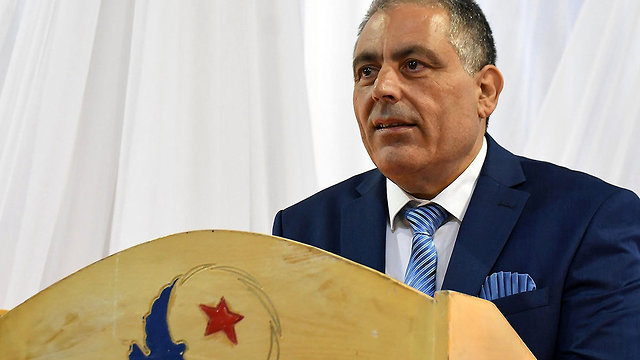
Decked out in a striking blue suit and white shirt, matching his political allegiance, Simon Slama rubs shoulders with fellow candidates ahead of Tunisia's municipal elections.

Nothing unusual about that—except he is the only Jewish candidate standing for the Islamist Ennahdha party.

Slama at his shop

A public relations stunt for some; a sign of genuine liberalization for others. But even if Slama fares dismally come the May 6 poll, his candidacy has become a major story in the nation. This will be the first municipal vote since former dictator Zine El Abidine Ben Ali fell from power in 2011. Ben Ali ruled Tunisia with an iron fists for 23 years, and was deposed in the so-called "Jasmine Revolution." The Ennahdha party, as part of which Slama is running, was founded after the dictator's ouster and was based on an Islamist movement founded in the North African country in 1981, inspired by the Islamic revolution in Iran and the Muslim Brotherhood movement in Egypt.
Simon Slama is running on the Tunisia Islamist party's ticket in the May elections (Photo: AFP)

Simon Slama is running on the Tunisia Islamist party's ticket in the May elections (Photo: AFP)

And while Slama looks at ease, joyously clapping hands on the campaign trail in the coastal town of Monastir, the 54-year old sewing machine repairman's decision to run drew fierce initial opposition from loved ones. "All my family were against my choice. My brother was angry and my wife went days without speaking to me," the candidate tells AFP, with a timid smile and a nervous fidget of the hands. "But I managed to convince them."
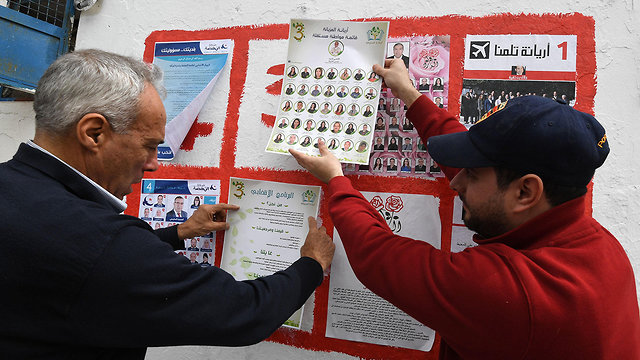
A candidate list in Monastir (Photo: AFP)

A candidate list in Monastir (Photo: AFP)

Slama and his relatives are among the small number of Jews still living in Tunisia. The community in the North African nation has shrunk from several hundred thousand before independence in 1956, to just 1,200 today. While Jews in the country, which is overwhelmingly Muslim, once served as lawmakers and even ministers, they have long since slipped to the margins of politics. Slama believes his candidacy is helping to change all that and has already "removed fears for Jewish Tunisian citizens".

Comrades in the Ennahdha party insist Slama is the right man to stand for office in Monastir—a symbolic town for Tunisians as it is the birthplace of Habib Bourguiba, the father of the country's independence.

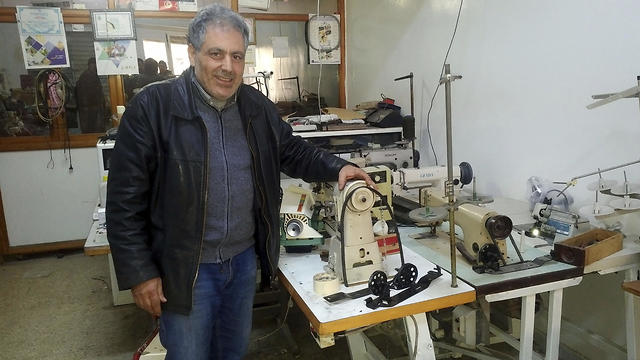
Slama at his sewing machine repair shop (Photo: AP)

Slama at his sewing machine repair shop (Photo: AP)

"He comes from an ancient family. He has his roots in Monastir... and he knows the town's problems," says Chokri ben Janet, who heads the party's candidate list in the town.

Slama says that despite its history as an Islamist party he opted for Ennahdha out of political conviction, describing it as "the most active and the most serious on the political scene". "Ennahdha has changed its strategy—it is no longer a religious party, it is a civil party," he says. The party is a junior partner in a coalition led by President Beji Caid Essebsi and his Nidaa Tounes party.
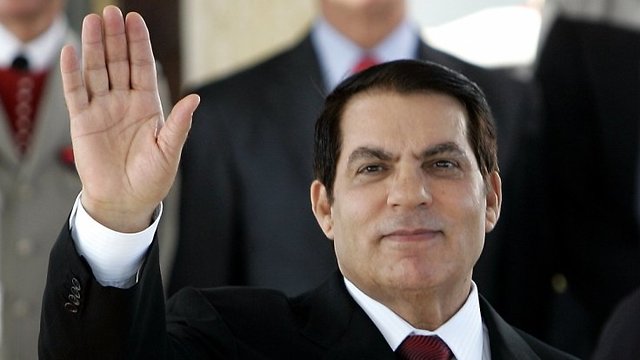
Tunisia has worked hard to modernize its image since ousting dictator Ben Ali in 2011 (Photo: Reuters)

Tunisia has worked hard to modernize its image since ousting dictator Ben Ali in 2011 (Photo: Reuters)

Taking stock from its experience in power after the 2011 revolution, it has worked hard to modernize its image. It opposed a project to criminalize any attempt to normalize relations with Israel; a vote on the proposal was dropped this winter. Now some of its leading candidates are women who don't wear the Islamic veil. All of these changes—including Slama's candidacy—have drawn derision from some political opponents who accuse the group of simple opportunism to bolster its vote. Top Nidaa Tounes official Borhane Bassais called it a "political striptease".

Others say that interest in Slama's candidacy highlights that while Jews can practice their religion freely they remain an anomaly in Tunisia—and shows the country still has a long way to go on minority rights.

The media frenzy is testament to "this obsession we have of judging (people) on the basis of something as personal as their religious conviction," says Yamina Thabet, an official for Tunisia's Association for the Support of Minorities. Some noteworthy figures have, nonetheless, thrown their weight behind Slama's bid for a seat. "This candidacy brings pride for the Jewish community," says Rene Trabelsi, who organizes the Jewish pilgrimage to Tunisia's famous Ghriba synagogue, on the island of Djerba.
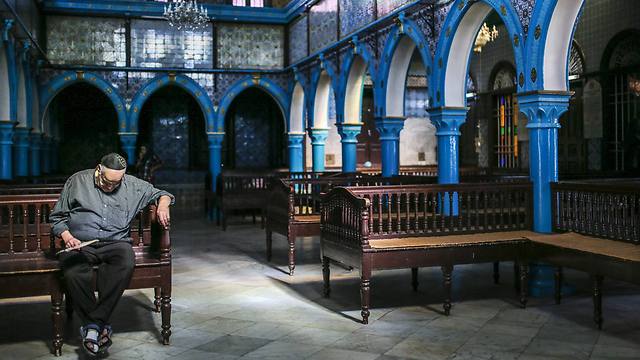
The famed synagogue in Djerba (Photo: Mosa'ab Elshamy , AP)

The famed synagogue in Djerba (Photo: Mosa'ab Elshamy , AP)

"It has created a positive image of an open Tunisia that we can all share," says the businessman, who was once a contender to become tourism minister. And as for the candidate himself, he appears comfortable with his identity and the attention his foray into politics has garnered. If he wins, Slama says, he is ready to take the oath of office on "both the books"—the Jewish Torah and the Muslim Koran.

Let's block ads! (Why?)

Tunisian Islamist party's Jewish candidate gears for elections : https://ift.tt/2HF1drl

Germany needs to do more to combat anti-Semitism, official says

Germany must do more to tackle anti-Semitism and should set up a national database to record anti-Semitic incidents that are not included in crime statistics, the country’s first anti-Semitism commissioner Felix Klein said on Friday.


The former diplomat, who will take up the newly created position next month, also said anti-Semitism was still rooted largely in extreme right-wing ideology and was not only being driven by Germany’s growing Muslim population.

Anti-Semitism is a highly sensitive issue in Germany, whose Nazi-era government murdered more than 6 million Jews during the Holocaust.

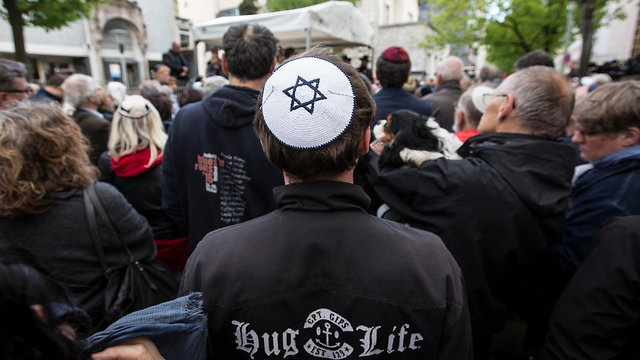
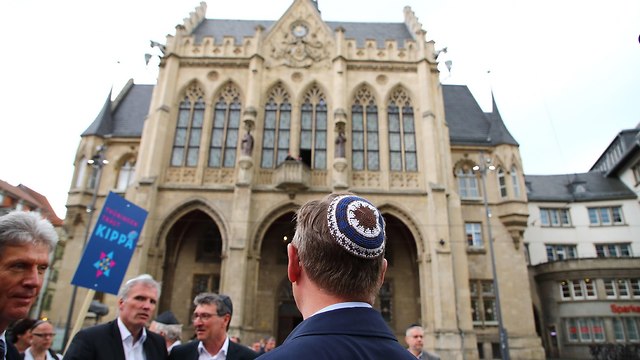
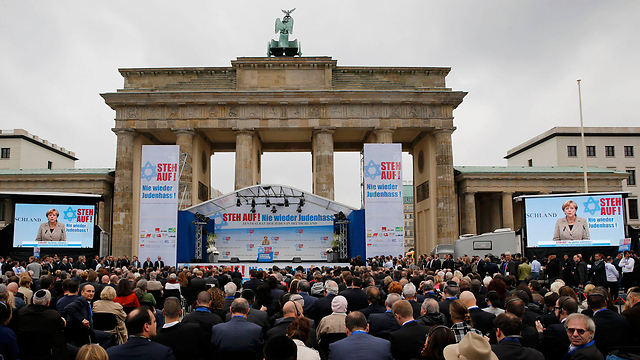
Kippah march in Berlin (Photo: EPA)

Kippah march in Berlin (Photo: EPA)


“There are many things going on to combat anti-Semitism but all the efforts have to be coordinated and sharpened,” Klein told Reuters.

“I hear from Jewish communities that they feel that anti-Semitic attacks and incidents have risen but that there is not yet a serious database that underlines and supports that perception.”

He said a national database should include everything that is not considered criminal, such as vulgar behavior and “stupid” comments. By drawing a more detailed picture, that would help authorities devise measures to combat anti-Semitism.

Last week, an Israeli Arab who wore the Jewish cap, or kippa, in Berlin as an experiment was subjected to verbal abuse by three people and was lashed with a belt by a Syrian Palestinian. A video was posted on the internet.

צילום: הפורום היהודי נגד אנטישמיות

That followed reports of bullying of Jewish children in schools. Thousands of Germans wearing kippahs took part in nationwide rallies on Wednesday to show solidarity with the Jewish community.

Official figures for the first eight months of 2017 showed nearly 93 percent of reported anti-Semitic crimes were linked to far-right extremism, despite predictions that a big jump in the Muslim population since Europe’s 2015 migrant crisis could fuel attacks or discrimination against Jews.

Klein stressed that anti-Semitism had been a problem in Germany long before the refugee influx and added that Jewish institutions here and in other countries had needed police protection before migrants started coming in large numbers.

“Anti-Semitism is not only Muslim-driven in Germany,” he said. “Of course we have a new challenge and new forms of anti-Semitism which we have to address and combat, but the great problem also rests with right-wing anti-Semitism and we have to develop good strategies to combat that, as we did before.”

Let's block ads! (Why?)

Germany needs to do more to combat anti-Semitism, official says : https://ift.tt/2vXR4Va

Friday, April 27, 2018

Filmmaker Loach hits back at Belgian premier in anti-Semitism row

British movie director Ken Loach accused Belgium’s prime minister on Thursday of overlooking the “flagrant breaches of international law” by Israel as a response to the prime minister's criticism of awarding Loach with the honorary doctorate in light of his alleged anti-Semitic views.

Speaking after being awarded an honorary doctorate at one of Belgium’s leading universities, Loach said he was shocked that Premier Charles Michel had chosen to criticize the institution for giving him the award.

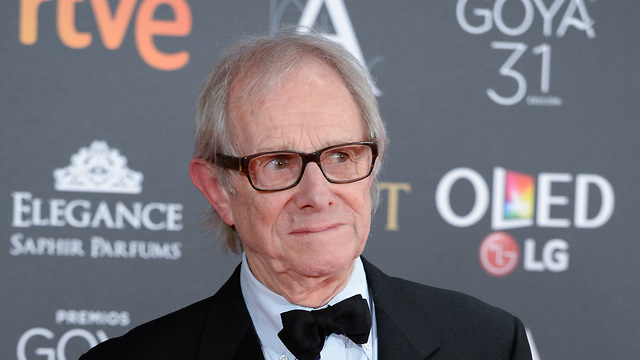
British movie director Ken Loach (Photo: Gettyimages)

British movie director Ken Loach (Photo: Gettyimages)

“Now, he’s a lawyer, Mr. Michel ... Did he I wonder, ask about the breaches of international law committed by Israel? Did he ask about the illegal occupation of Palestinian lands?” said Loach, the 81-year-old director of 2016 Palme d’Or winner “I, Daniel Blake”.

Michel, 42, studied law at the Free University of Brussels and chided it on Wednesday for plans to award Loach an honorary doctorate. Loach denies accusations that his support for Palestinians is anti-Semitic.

In a speech on Wednesday at Brussels’ Grand Synagogue to mark the 70th anniversary of Israel’s foundation, Michel said: “No accommodation with anti-Semitism can be tolerated, whatever its form. And that also goes for my own alma mater.”

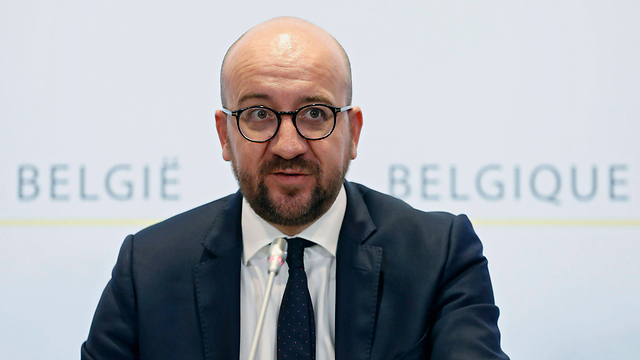
Belgium's Prime Minister Charles Michel (Photo: EPA)

Belgium's Prime Minister Charles Michel (Photo: EPA)

In a statement on Thursday, the European Jewish Congress called on the university to revoke its decision to honor Loach, saying he had “constantly undermined efforts to combat anti-Semitism in the UK”.

The dispute in Belgium comes as the British Labour Party under left-winger Jeremy Corbyn, for whom Loach has been a vocal supporter, is battling allegations of anti-Semitism.

Let's block ads! (Why?)

Filmmaker Loach hits back at Belgian premier in anti-Semitism row : https://ift.tt/2Jxg9rM

Wednesday, April 25, 2018

Germans don skullcaps to protest anti-Semitism

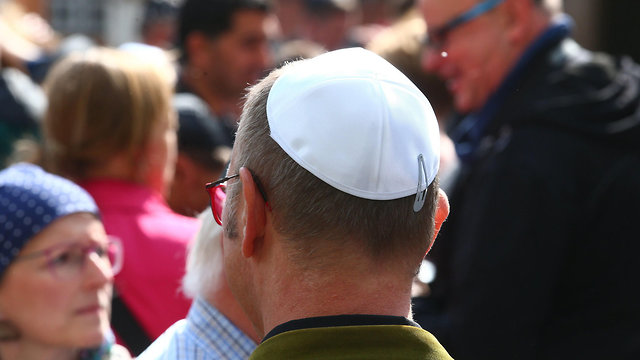
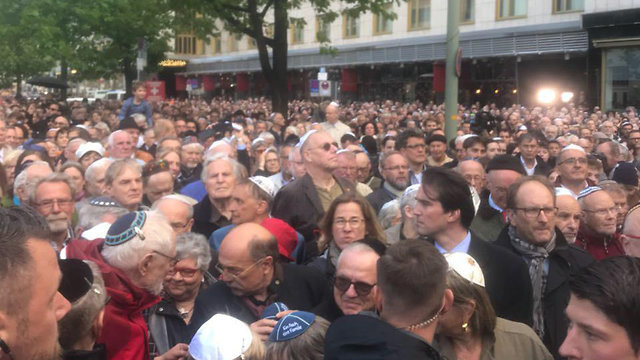
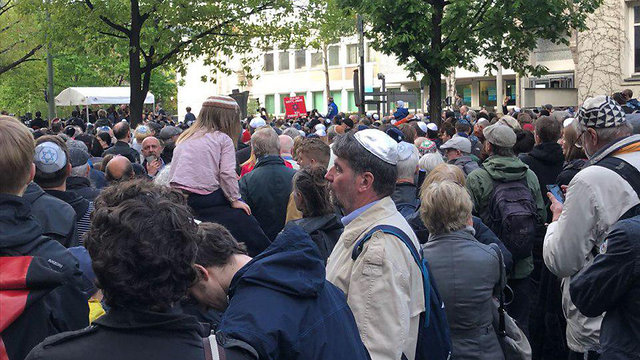
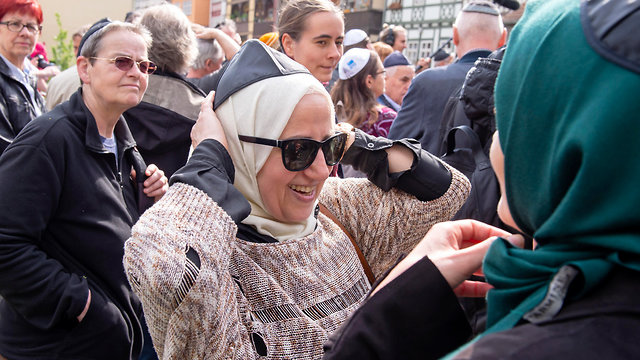
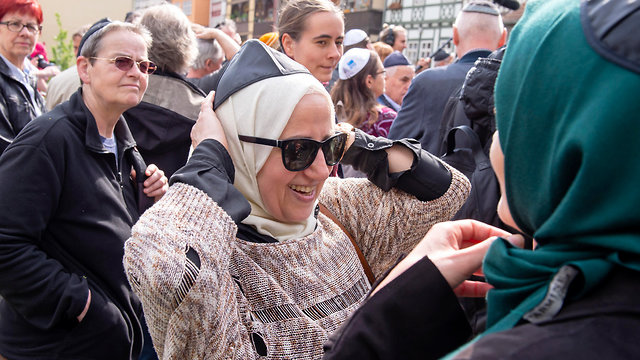
A “Kippah March” got underway in Germany on Wednesday in a mass display of solidarity with the country’s Jewish community after a video that surfaced earlier this week showed a 19-year-old Syrian asylum-seeker whipping a man wearing a skullcap in Berlin. The march went ahead despite exhortations from the head of Germany's Central Council of Jews, Josef Schuster, who told broadcaster Radioeins Tuesday that wearing a skullcap is right in principle, but that he was advising individuals "against showing themselves openly with a kippah in a big-city setting in Germany, and wear a baseball cap or something else to cover their head instead."

Israel's Chief Rabbi David Lau, however, called on German Jewry to refrain from removing skullcaps from their heads while out in public, despite the danger of being targeted for anti-Semitic hate crimes as a result.
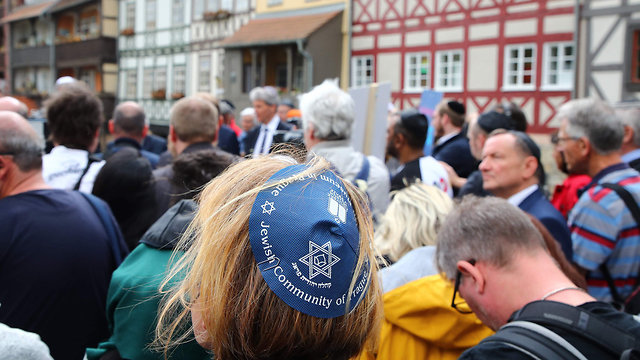
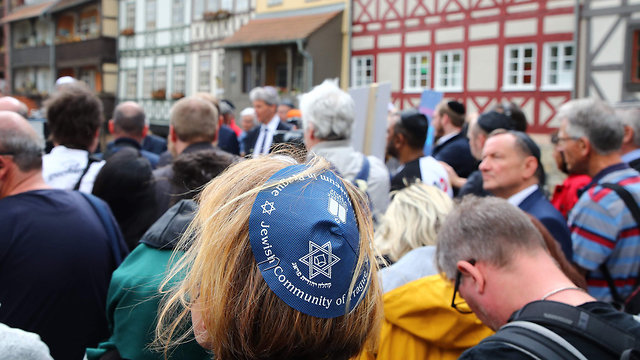
Kippah March in Berlin (Photo: AFP)

Kippah March in Berlin (Photo: AFP)


Five hundred people took part in the rally, as marchers donned a skullcap as a show of defiance against the rising tide of anti-Semitism and as many Jews wonder about their safety in Germany, which has tried to atone for Nazis’ killing of 6 million European Jews in the Holocaust more than 70 years ago.

“Since World War II, there has not been a demonstration like this in which so many people have worn the Kippah outside a Jewish community building in Berlin,” said Schuster, whose advice ultimately went unheeded.

“We can never allow anti-Semitism to become a norm in Germany,” said Foreign Minister Heiko Maas ahead of the march. “There can be no discrimination against any person because of his ethnicity, skin color or religion.”


The march was also attended by Berlin Mayor Michael Müller. “Berlin stands firm alongside the State of Israel. When Jews are attacked here, it is an attack on us all,” he said.
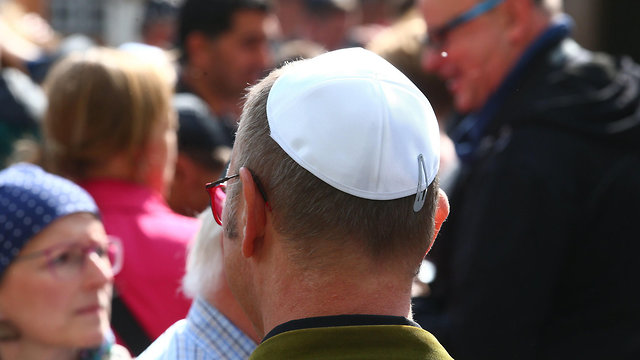
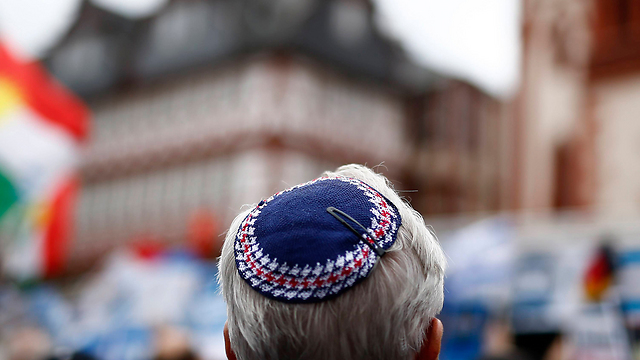
 (Photo: AFP)

(Photo: AFP)

Germany's music industry scrapped its prestigious annual Echo awards on Wednesday after a row over anti-Semitism, hours before the nationwide rallies were due to take place.

The awarding of this year's Echo music prize to a rapper duo accused of reciting anti-Semitic lyrics caused outrage. Several previous winners returned their awards in protest.

In a further show of solidarity with the Jewish community, the BVMI music association said the Echo prize had been so damaged by the row that a new start was required.

"On no account do we want this music prize to be a platform for anti-Semitism, contempt for women, homophobia or for belittling violence," it said in a statement.

The controversial winners were Kollegah and Farid Bang, whose lyrics include: "I'm doing another Holocaust, coming with a Molotov" and who sing that their bodies are "more defined than Auschwitz prisoners".

Kollegah and Farid Bang (Photo: AFP)

Kollegah and Farid Bang (Photo: AFP)

The rising tensions have come as a time when Germany has been grappling with an influx of more than 1 million mostly Muslim migrants, along with the rise of a nationalist party, the Alternative for Germany, which was elected to Parliament last year. Its leaders are known for their openly anti-Muslim stance, but their anti-Semitism is less apparent.

Across Europe, anti-Semitism has been on the rise in recent years, and thousands of Jews—mostly from France—have moved to Israel.

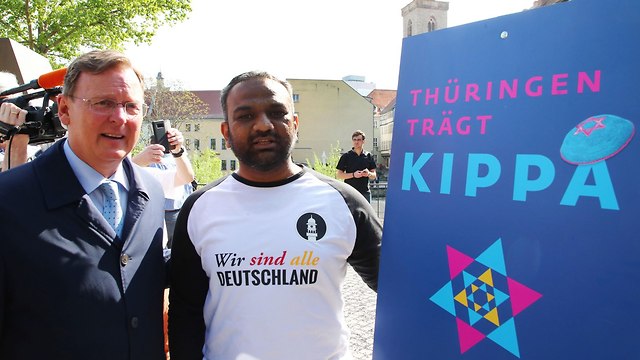
About 150 people—Jews, Muslims, Christians and atheists—came together Wednesday and put on kippahs in a show of solidarity in the eastern city of Erfurt. Other rallies were expected later in the day in Berlin, Cologne and Potsdam.

In last week’s attack in Berlin, the 21-year-old victim, an Arab Israeli who said he wore the kippah in a show of solidarity with his Jewish friends, caught the assault on video, which quickly went viral. It showed a young man whipping him violently with a belt while shouting “Yahudi!”—Jew in Arabic.

The RIAS group that tracks anti-Semitism said there were 947 anti-Semitic incidents last year in Berlin, including 18 attacks and 23 threats last year.

In all of Germany, authorities say there are a high volume of anti-Semitic incidents reported, with the equivalent of nearly four per day in 2017. There were 1,453 anti-Semitic incidents, compared with 1,468 incidents in 2016 and 1,366 in 2015.

Schuster’s comments on hiding the skullcap drew sharp criticism from other Jewish leaders, who say Jews should wear a kippah to show they’re not afraid.
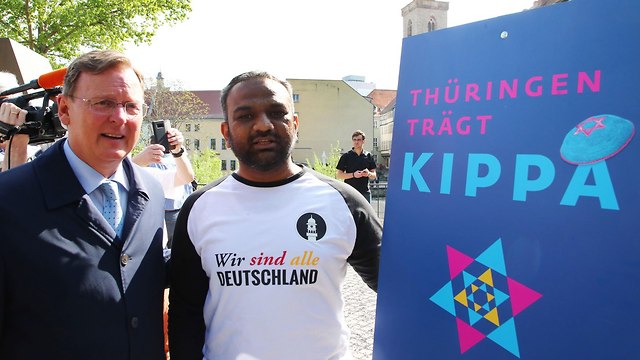
 (Photo: AFP)

(Photo: AFP)

“Jewish identity is not something we should hide,” said Rabbi Yehuda Teichtal. “We have to be proud of who we are and at the same time fight anti-Semitism.”

Yesh Atid leader Yair Lapid also attended the march. “Jews cannot be afraid to walk around with their Kippah in Germany in 2018. I am willing to accept a situation in which we are afraid and our children are afraid like their parents and grandparents were scared,” Lapid said.


“I met today with people from the Jewish community and they asked me what I think and I told them, walk around with your Kippah and clubs and react in the way Jews should react in 2018 when someone threatens them,” he added.

“Anti-Semitism has and always, and will exist. We have a state, and because of that we have an army, and because of that I can march today in Germany and tell anti-Semites that they can bite us.” 

For years, many Jewish men in Germany and across Europe who wear the kippah as a symbol of their devotion to God have been hiding their skullcaps under baseball hats when they are in public.

Anti-Semitism has existed in Europe for hundreds of years, often fanned by Christian churches who have blamed Jews for the killing of Jesus. In recent decades, however, Muslim immigrants have added a new strain by holding Jews responsible for the Israeli-Palestinian conflict.

“We also have new phenomena (of anti-Semitism in Germany). We have refugees now, for example, or people of Arab origin who are bringing a different type of anti-Semitism into the country,” Merkel told Israeli TV this week. “In the new government, we have for the first time appointed a commissioner for Jewish life in Germany and in the fight against anti-Semitism.”

The decision followed a recommendation by experts and came amid concerns over the bullying of Jewish children in schools in recent months and the burning of Israeli flags during a recent pro-Palestinian protest in Berlin.

Earlier this month, a rap band that included cynical references about the Auschwitz death camp in its lyrics won the Echo award, Germany’s most important music prize, drawing strong criticism from other artists and government officials. After several past winners said they would return their awards, the German music industry behind the Echo said Wednesday it would scrap the prize in its current form.
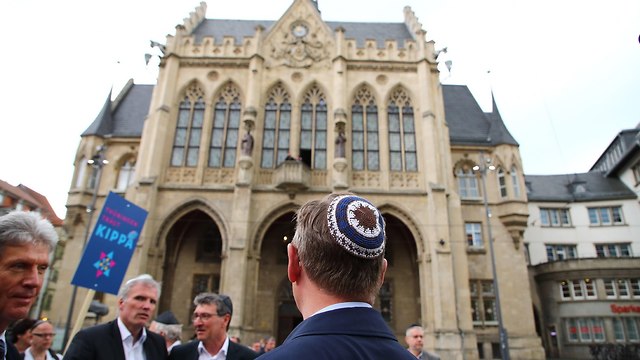
 (Photo: AFP)

(Photo: AFP)

Neighboring France also has witnessed virulent anti-Semitism in recent years, notably in two Islamic extremist attacks targeting a Jewish school and a kosher supermarket. More recently, authorities say anti-Semitism was a motive for the stabbing death last month of an 85-year-old Parisian woman, a killing that shocked France.

Thousands of French Jews have left for Israel in recent years, but France still has the highest Jewish population in Europe, about half a million.

Around 200,000 Jews live in Germany, most of them immigrants from the former Soviet Union. That’s fewer than half of the 500,000 Jews who lived in the country before the Holocaust.
 (Photo: AP)

(Photo: AP)

Some 3.3 million Jews lived in Poland on the eve of the Holocaust, making it Europe’s largest Jewish community, and the second-largest in the world. There are no exact numbers today because many people with Jewish roots do not register. Estimates are in the thousands.

Poland witnessed a startling wave of anti-Semitic comments earlier this year by government officials amid a dispute with Israel over a new Polish law. The law criminalizes blaming Poland for Holocaust crimes. The anti-Semitic rhetoric, unprecedented in Poland in 50 years, deeply shook the country’s tiny Jewish community.

Despite the rhetoric, Poland is still considered one of the safest countries in Europe for Jews, with violence extremely rare. With no radical Muslim population and no left-wing anti-Semitism, Jews in Poland have to worry only about the extreme right, which is small but growing more emboldened.


Kobi Nachshoni, Itamar Eichner, Associated Press and Reuters contributed to this report.

Let's block ads! (Why?)

Germans don skullcaps to protest anti-Semitism : https://ift.tt/2HZGEH3
Tuesday, April 24, 2018

German Jewish leader advises against skullcaps in cities

Germany's main Jewish leader says he would advise people visiting big cities against wearing Jewish skullcaps, following a street assault last week on two young men wearing them. The attack in Berlin, in which a 19-year-old Syrian asylum-seeker is a suspect, added to growing concern in Germany about anti-Semitism.

Anti-Semitic incident    (צילום: הפורום היהודי נגד אנטישמיות)

 (Photo: Reuters)

(Photo: Reuters)

Josef Schuster, the head of Germany's Central Council of Jews, told broadcaster Radioeins Tuesday that wearing a skullcap is right in principle, but that he was advising individuals "against showing themselves openly with a kippa in a big-city setting in Germany, and wear a baseball cap or something else to cover their head instead."
Rally against anti-Semitism in Germany (Archive photo) (Photo: Reuters)

Rally against anti-Semitism in Germany (Archive photo) (Photo: Reuters)

Schuster suggested three years ago that Jews shouldn't wear skullcaps in areas with large Muslim populations. But he stressed there's increasing anti-Semitic sentiment among non-migrants.

Screenshot (Photo: Jewish Forum for Democracy and Against anti-Semitism)

Screenshot (Photo: Jewish Forum for Democracy and Against anti-Semitism)

Berlin's Jewish community said they were organizing a "kippah march" Wednesday following the assault of a Adam Arush, a 21-year-old Israeli Arab wearing a skullcap in the German capital last Tuesday. The precession will take place next to the Jewish community building.

The Jewish community plans to hand out thousands of kippahs to everyone interested in expressing solidarity with the Jewish community in Germany by wearing them proudly across the city.

Let's block ads! (Why?)

German Jewish leader advises against skullcaps in cities : https://ift.tt/2JmuU0u

The Jews-by-choice of San Nicandro, Italy

The small synagogue in the remote village of San Nicandro, in the province of Puglia in southeastern Italy, is the only one in the world where the women’s section is three times as large as that of the men. The women of the community maintain a flourishing Jewish lifestyle in the heart of a devout Catholic area. In most cases, their husbands are Catholics and many of them are not considered Jewish according to Jewish law—but this does not prevent them from feeling that they are proud Jews. The unique synagogue is located in a small building which the women, many of whom are engaged in agriculture, bought in 1994 with money they had collected on their own, lira by lira, and without any external help, so that they would have a place to pray. “We would tell our husbands that the price of the dress we bought was a bit more expensive, and we would save the difference in money for the purchase of the synagogue,” one says with a wry smile.
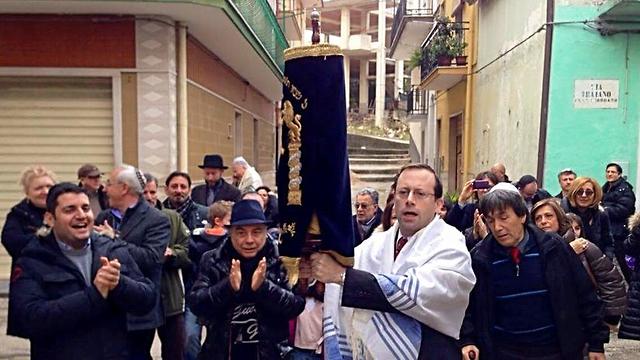
Freund at a Torah scroll introduction ceremony. The small Jewish community has only eight children, and the women fear there will be no Jews left

Freund at a Torah scroll introduction ceremony. The small Jewish community has only eight children, and the women fear there will be no Jews left

We came to visit the village together with Michael Freund, the founder and chairman of Shavei Israel—an international Jewish organization based in Jerusalem. Its goal is to reach out to communities around the world with Jewish ancestry as well as those who want to connect with the Jewish people. Rabbi Pinhas Punturello, Shavei Israel’s emissary to Italy, also joined us.

The women of the community were very moved by their visit, and they received the guests from Israel with songs and hymns in Hebrew and Italian. We were welcomed into the home of Lucia Guellano Leone, 50, one of the dominant women in the community. Her husband, Matteo, is a former Catholic who underwent conversion with her, and now works as a kosher supervisor at a cracker factory in the port city of Bari.

Inside the Holy Ark in the local synagogue there is, among other things, a particularly old Torah scroll that is 300 to 400 years old. Next to it is a Megillat Esther, the Book of Esther that is read on the holiday of Purim, which the women of the community had prepared many years ago—although it was clear to them that according to Jewish law it was invalid. Two years ago, they received a kosher scroll, which is used for reading on the festival, but they refuse to discard the non-kosher scroll, which for them serves as a symbol. The story of the community of converts from San Nicandro, which could easily become a Hollywood movie, begins in the first World War. Donato Manduzio (1885-1948) was a farmer’s son who had never set foot in a school. During World War I, he was drafted into the army and wounded, and then hospitalized in a military hospital in Pisa with his legs paralyzed. In the bed next to him lay a wounded man who taught him to read and write, and so he began to read books. When Manduzio returned to San Nicandro, he read a great deal of Italian literature and became a healer who brewed potions. After undergoing a “divine revelation” in the middle of the night, he began to study the Old Testament and came to the conclusion that Judaism is the true religion. He began observing Shabbat and gradually other commandments. He conveyed his new teachings to his followers, and established the San Nicandro Jewish community, which at its height numbered 80 people. Sometime afterward, a merchant who happened upon the village found himself in the midst of a conversation between Manduzio and one of his followers, who were discussing the Book of Psalms. The merchant asked Manduzio if he was an evangelical, and Manduzio replied: “No, we are the people of God” ("Popolo di Dio”). When the merchant told him that there were thousands of Jews living in Rome, Milan, and Florence, Manduzio was stunned. He was convinced that the people of Israel he had read about in the Old Testament were extinct and no longer existed. He asked the merchant to give him the addresses of the Jewish communities and immediately sent them letters. After a lengthy exchange of correspondence, the Jewish community of Rome concluded that the San Nicandro community was serious and worthy of being converted. The Chief Rabbi of Rome dispatched a messenger to visit the Mityahadim, or “Jews-by-choice” —as the Italian Jewish community called them—and on that visit the village’s first synagogue was dedicated and the community received prayer shawls, a menorah and several other religious articles. Today, there are about 50 people living in the village who continue to maintain a Jewish lifestyle. They observe Shabbat, perform public prayers on Shabbat and Jewish holidays in Hebrew and in Italian, and consider themselves Jews in every way. The Jewish women of San Nicandro eat kosher food, which they prepare themselves. They even make kosher cheese on their own under supervision. On Sukkot, they erect a large sukkah, organize joint meals on festivals, and every Friday they make a communal Kiddush and Shabbat meal. They make sure to eat only kosher meat, which is brought from Rome, separate meat and dairy, bake their own challahs and of course light Shabbat candles. The synagogue compound has a screen, which they use to connect to a virtual class on-line with Italian rabbis in order to study Torah. There is a Beit Midrash, which also serves as a museum of the San Nicandro community. On the wall are historical photographs that describe the life of the community from the days of the prophet Manduzio until the present. Among the pictures are children dressed up in costume on Purim, lighting Hanukkah candles, dancing with a Torah scroll and celebrating Israel's Independence Day, which the community in the village marks every year.
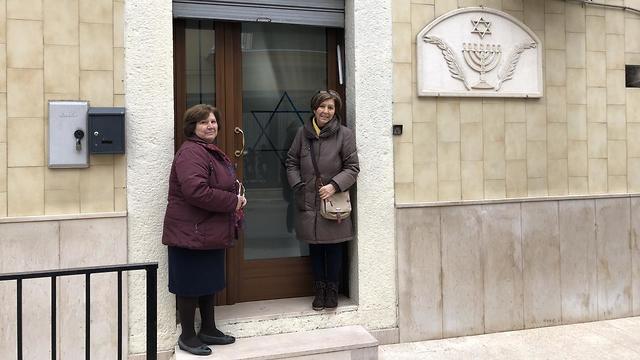
Lucia Zorro and her sister Josephina outside the village synagogue

Lucia Zorro and her sister Josephina outside the village synagogue

The small Jewish community in the village has only eight children, and the women fear that there will be no Jews left in San Nicandro in the future.

The small and well-kept synagogue is located on a central street in the village. There are about 30 people praying on Friday night and about 40 on Shabbat, most of them women. The prayer includes melodies and fragments of poetry. The morning prayer lasts four hours, part in Hebrew and partly in Italian, and the Shabbat service in the synagogue is the center of life for the Jews of the village.

“The Jews of San Nicandro are a unique phenomenon. It is the first time in the modern era in Europe that an entire group of people formally embraced Judaism,” says Shavei Israel Chairman Michael Freund. “Manduzio and his followers,” Freund says, “discovered the truth of Judaism entirely by themselves and without any external prompting. Despite the rise of fascism and hatred towards Jews at that time, they adopted a Jewish lifestyle with courage and determination and did not give up even after Mussolini decreed the racial laws against the Jews in 1938. They see themselves as spiritually connected with the Jewish people and the religion of Moses and Israel.” The racial laws against the Jews of Italy were not applied against Manduzio and his followers, due to their Italian Catholic origin, despite their insistence on telling Italian fascist policemen, and later the German Nazi soldiers who entered the village, that they were Jews. Luckily, no one believed them. In 1943, Manduzio quarreled with one of the fascists in the village, who threatened to go to the police the next day and ask to arrest all the Jews. The legend in the community relates that Manduzio, who engaged in Kabbalah, told him: “You will not arrive tomorrow.” A few hours later, the man fell and died. In October of that year, the British army captured the village from the Germans. Several jeeps belonging to the Jewish Brigade, a group of Jewish fighters from the Land of Israel who served in the British Army during World War II, passed through San Nicandro and they were emblazoned with the Star of David. Manduzio’s followers saw the jeeps pass but did not manage to stop them. They ran to tell Manduzio about the encounter and he decided to paint a flag with a Star of David on a blue background and hang it on his house—in case the jeeps passed by again. And so it was. The Jewish officers from Israel, who did not know a word in Italian, were astonished to meet Jewish farmers in the remote village. The soldiers of the Jewish Brigade spoke to Manduzio and heard his story. They decided to call him “the Prophet,” a nickname that would accompany him later on. Members of the Jewish Brigade urged the people of San Nicandro to immigrate to Israel, telling them a Jew’s place was in the Land of Israel. In 1946, the rabbinate in Rome converted the community. In the years 1947-1949, 74 members of the San Nicandro community immigrated to Israel on ships that brought Holocaust survivors from Europe. They settled in three communities: Ashkelon, Bat Yam, and Safed. The “prophet” Manduzio objected to their emigration on the grounds that the role of the community was to be a light unto the nations. He remained in the village with his wife and three other women who were married to Catholics. A few months prior to the establishment of the State of Israel, Manduzio passed away and was buried in the Jewish section of the small cemetery in San Nicandro. On his grave is a Star of David and the inscription: “Here is buried he who lived under the delusion of worshipping foreign gods until 1930, but on August 11 of that year, by Divine inspiration, called himself Levi, proclaimed the unity of God and the observance of the Sabbath.” In recent years, 14 of the 50 members of the San Nicandro community have undergone conversion by an Italian rabbinical court, thanks in large measure to the efforts of the late Rabbi Giuseppe Laras, one of Italy’s most prominent rabbis, and Shavei Israel. The rest of the women have encountered difficulties in undergoing the complex conversion process, which requires undertaking a long trip and residing in one of the larger Jewish communities in Italy, such as Rome or Milan. Apart from the fact that this will disconnect them from the village and their fields, the requirement that they convert to be officially recognized as Jews offends some of them. “The fact that they do not officially recognize me does not change the fact that I'm Jewish,” says Grazia Casavecchia, a member of the community. "I study Torah without calling it a conversion process because I am already Jewish. When I follow the commandments and maintain a Jewish lifestyle it gives me a good feeling and I don’t care if I do not have a formal stamp of approval. It is like discovering one day that you are an adopted daughter of Judaism, and it's hard to accept it.”
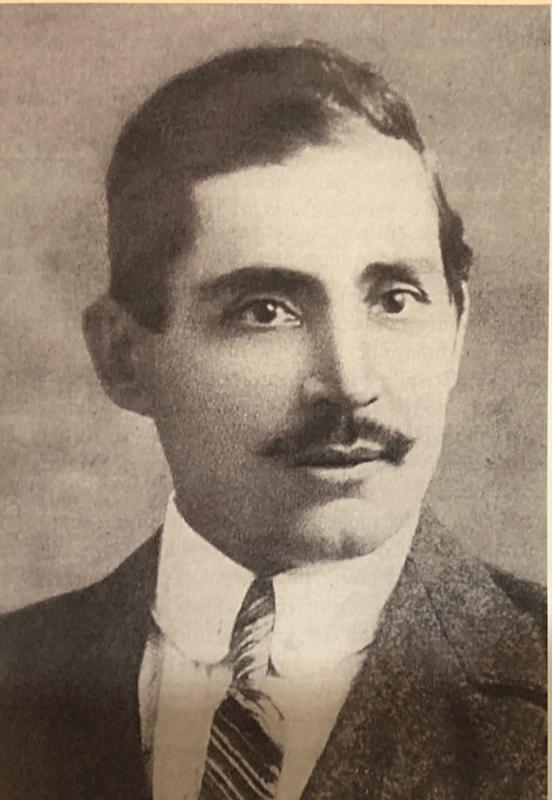
The ‘prophet’ Donato Manduzio

The ‘prophet’ Donato Manduzio

Lucia Leone, who specializes in growing tomatoes, peppers and olives, and also makes excellent olive oil, describes the insult she felt before she completed her conversion: “I cried when I heard from the rabbis that I was not Jewish according to halacha. How can it be? I am a descendant of Manduzio’s followers and I also have a Jewish family living for many years in Israel.” Lucia Zorro, 50, who is married like most women in the community to a Catholic man, boasts that, “my children live as Jews, but when they grew up they moved away from it a little. The amazing thing is that my husband got angry at them and asked them to respect their mother and continue to live a Jewish life.” Her husband, Nazzario, stopped eating pork two years ago and refrains from going to a cafe or restaurant on Shabbat. The women, though, do not pressure the husbands to convert: “There is mutual respect here,” explain the men and women alike. Thus, for example, the Catholic husband of Grazia Sochi, one of the community activists, prepared a menorah and a Star of David at his workshop and then placed them in their field. She boasts that he also paid 6,800 euros to bring into the house a “smart” clock system that operates all the electricity in an automated fashion, including lighting and shutters, in order to observe Shabbat properly. “My husband even encourages our sons to go to synagogue with me,” she says. “He respects me very much and at home we celebrate only Jewish holidays. We do not celebrate any Catholic holidays, but my husband does not want to convert and I respect him.” The San Nicandro community in Israel continues to maintain contact with the “mother community” in Italy and their members come for visits and vacations in the summer. According to them, they did not experience any problems of anti-Semitism, and the mayor even named a square in the town after Manduzio. The women of San Nicandro consider the possibility of immigrating to Israel, but they claim that without conversion it is unrealistic. Their economic situation also makes it difficult for many to visit Israel, but that does not stop them from dreaming about the Promised Land. “Every day when I pray, I close my eyes and imagine myself at the Western Wall in Jerusalem,” says Grazia with glistening eyes. And who knows, perhaps her prayer will soon come true. Michael Freund of Shavei Israel says he hopes to organize a trip to Israel for San Nicandro’s determined “Jews-by-choice” this summer, enabling them at last to realize their dream.

Let's block ads! (Why?)

The Jews-by-choice of San Nicandro, Italy : https://ift.tt/2FcmkPm

Monday, April 23, 2018

Putin eats matzah all year round, says Russia's chief rabbi

Russian President Vladimir Putin is particularly fond of matzah and eats the unleavened flatbread, which is part of the Jewish cuisine during Passover, all year round, according to Russia's Chief Rabbi Berel Lazar, a close associate of the Russian leader.

Lazar told reporters during the Limmud FSU festival, which is aimed at strengthening the Jewish identity of Russian-speaking Jews, that Putin eats matzah while drinking tea.


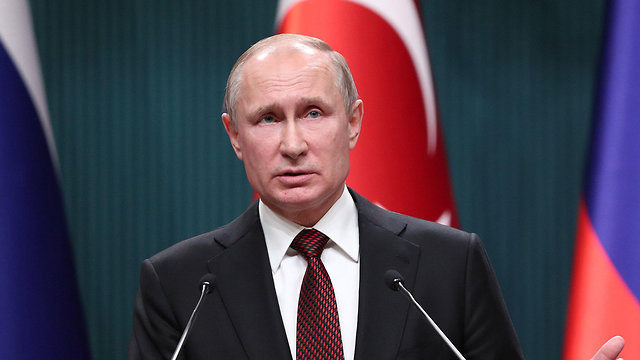
Vladimir Putin (Photo: EPA)

Vladimir Putin (Photo: EPA)

"Putin said matzah is tasty, easy and healthy to eat. He eats the matzah I bring him," the rabbi said.

  The Limmud FSU festival took place in Moscow to mark Israel's 70th Independence Day. Some 2,000 people attended the festival, including Immigrant Absorption Minister Sofa Landver, Israel's Ambassador to Russia Gary Koren and Deputy Director General of the Euro-Asia Department of the Ministry for Foreign Affairs Alexander Ben-Zvi.

Chaim Chesler, the founder of Limmud FSU, said the festival, the flagship event of the organization, is being held in Russia's capital, Moscow, for the 12th consecutive year. "The festival is the most important event for Russia's Jewry and I hope the organization will continue strengthening the young Jewish generation in Russia for many years to come," Chesler added.

Chief Rabbi Lazar emphasized Putin's evolvement in the Jewish community in Russia. "Putin knows which city has a synagogue and which city doesn't. The Jewish museum was inaugurated following his visit to Yad Vashem in Jerusalem where he was very moved. He even contributed one of his salaries to the Jewish museum project," Lazar elaborated.

Let's block ads! (Why?)

Putin eats matzah all year round, says Russia's chief rabbi : https://ift.tt/2vDBoGB

Search

Featured Post

JAX firefighters find Jaguars star Travis Hunter at the scene of a call last week - Action News Jax

[unable to retrieve full-text content] JAX firefighters find Jaguars star Travis Hunter at the scene of a call last week    Action News Jax ...

Postingan Populer